March 14, 2013 – Costa del Sol, and through the hinterland of Spain

March 14, 2013 – A round up of 10 weeks on the Costa del Sol, and through the hinterland of Spain

Note – hover the mouse/cursor on a picture for a description, or click on the image for an enlargement.

We apologise in advance to our friends for naming them in the photos – it’s so we don’t forget who they are !

We arrived in Marbella on 15th December, and stayed on the Camping Marbella Playa site for 10 weeks, until end of February.  It was probably one of the best decisions we’ve made so far, as the weather was very kind (only 2 rainy days in 10 weeks), the temperatures were mild, and best of all we made friends with some lovely people on site who we hope to catch up with again soon in the UK.

Camping Marbella Playa:  The campsite is between the beach and the N340 highway, which would have to be one of the busiest roads in Spain, and is roughly half way between Fuengirola and Marbella.  Not many bike tracks around this area, although we biked a few times to the local village of Elviria for shopping, but the bus service is good, running on both directions on the N340 every half hour, for €1.60 – €1.80 either way.  There were lots of Germans, Dutch and Scandinavians wintering on site, plus quite few Spanish with semi-permanent awnings etc. over their caravans.  The remainder are a scattering of English, Scottish, Welsh and Irish (firmly identifying themselves separately), plus us as the sole reps from the Antipodes.  The only other Kiwis we saw the whole time were two couples who came through at different times in late February on their way to Portugal and Morocco.

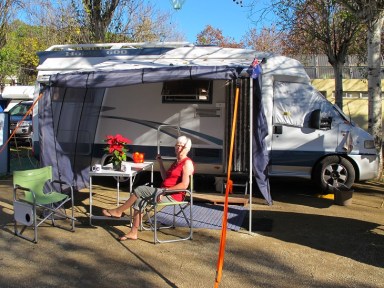
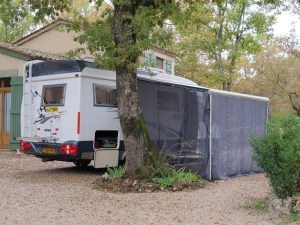
d'Hobby on site at Marbella Playa

d’Hobby on site at Marbella Playa

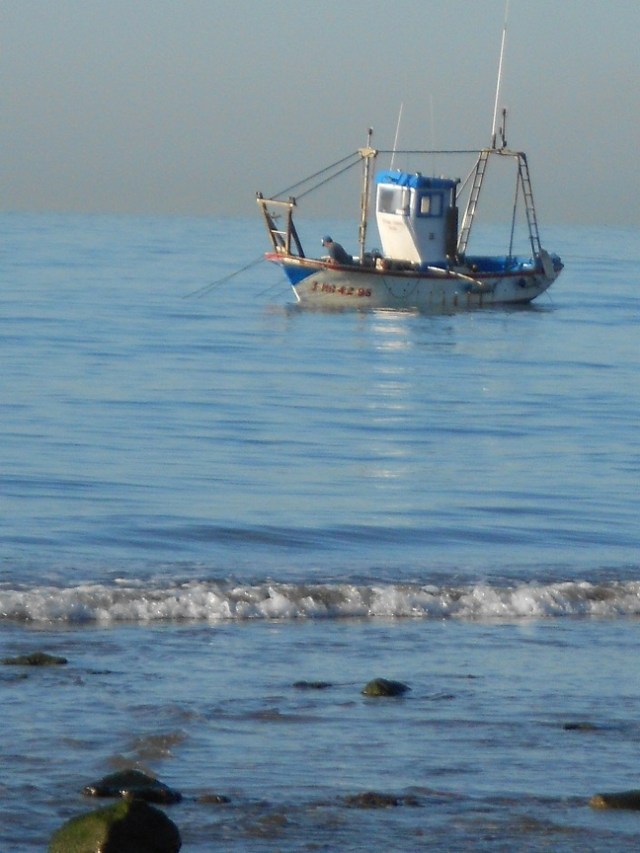
Fishing boat off Marbella Playa
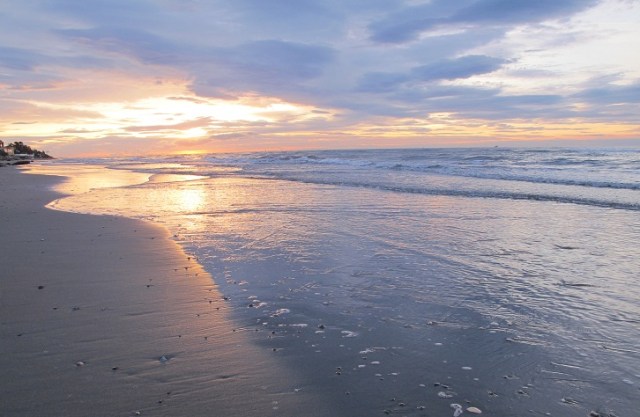
Fishing boat off Marbella Playa

Dawn on beach Marbella Playa

Dawn on beach Marbella Playa

Marbella Playa sunset
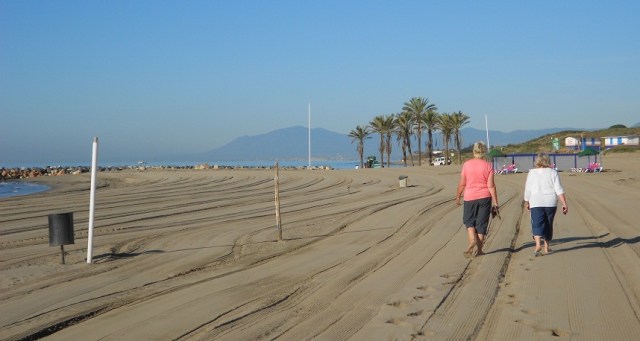
Marbella Playa sunset

Walking the beach - Cabapino

Walking the beach – Cabapino

As already mentioned in an earlier chapter we spent three nights at Christmas at a hotel in La Cala de Mijas (on the coast) with some of our English friends from the camp-site, and had a great time eating drinking and walking the locality.  New Year was spent on the camp-site, celebrated with friends, a large paella and lots of wine.

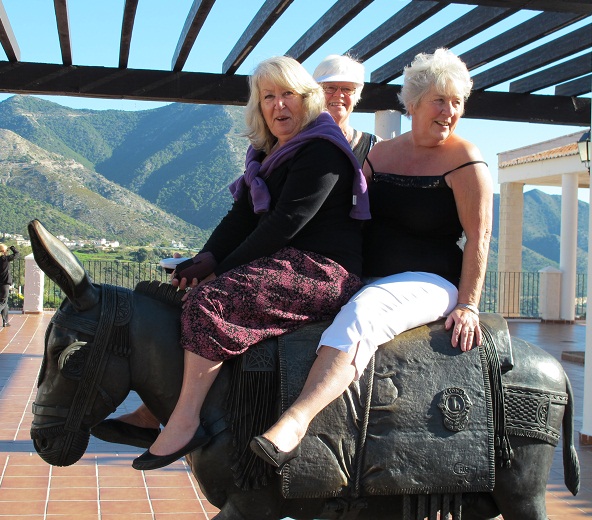
Mijas:  On the day we left La Cala after Christmas our friends took us on a visit to Mijas (Meehass) itself, which is a small Pueblo Blanco (white town) in the hills behind Fuengirola.  Although very touristy, Mijas is one of the prettiest towns on the Costa, with fantastic views out to the coast, and is famous for its donkeys known as ‘Mijas Taxis’.
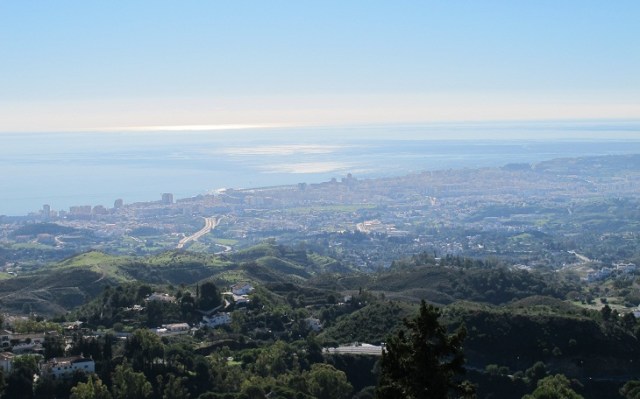
Mijas (3)

View towards Fuengirola from Mijas

Mijas (1)

Mijas donkey (!)

Mijas (2)

No more room ! Jan, Lorraine & Doreen
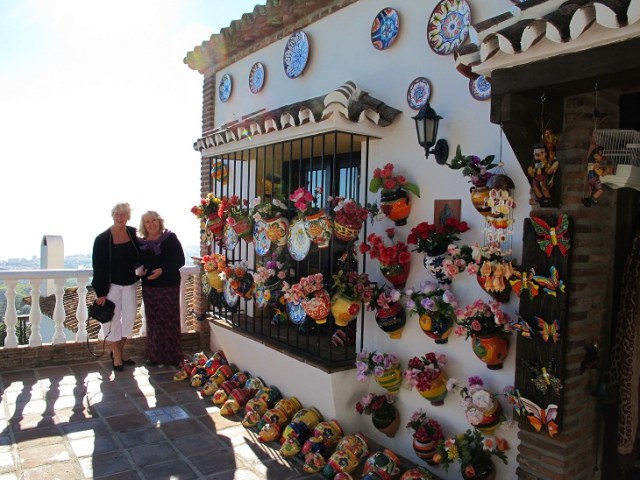
Mijas (4)

Mijas – Lorraine & Doreen (Dolly)

Mijas (5)

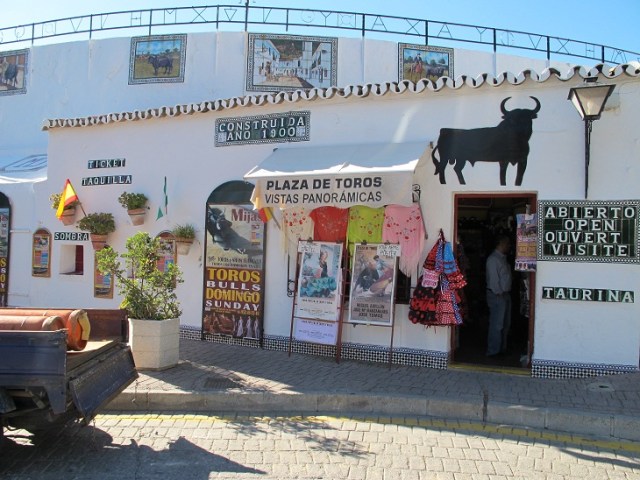
Mijas bullring

Mijas (6)

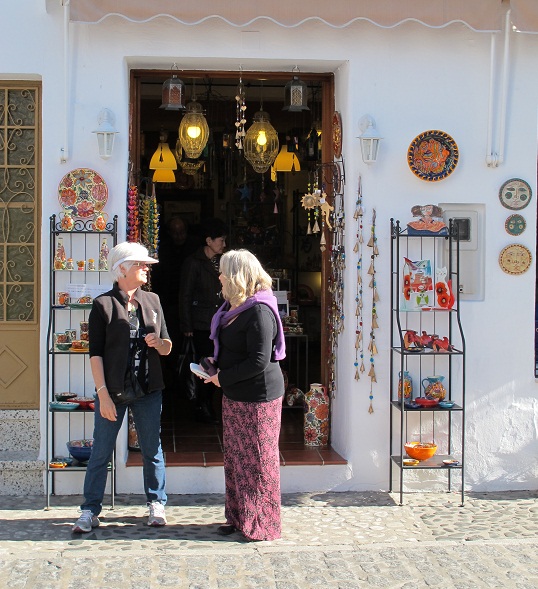
Mijas – Jan & Lorraine

Mijas (7)

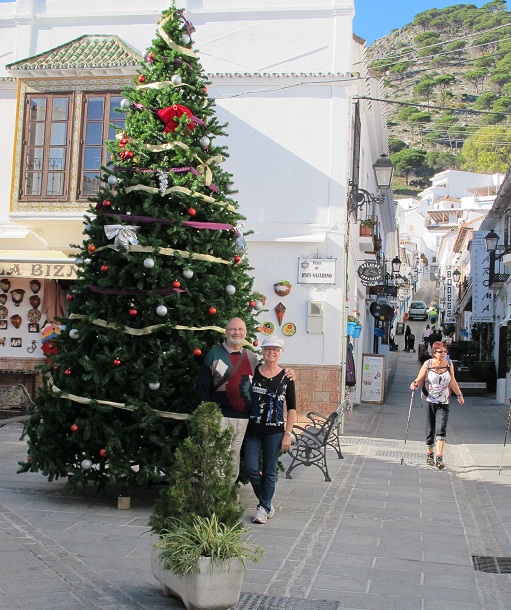
Mijas – still Christmas !

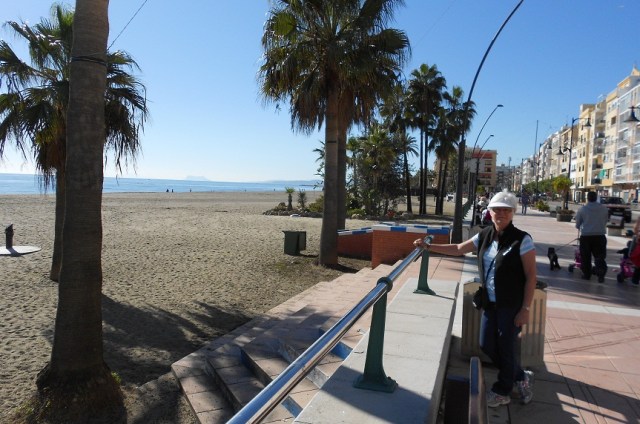
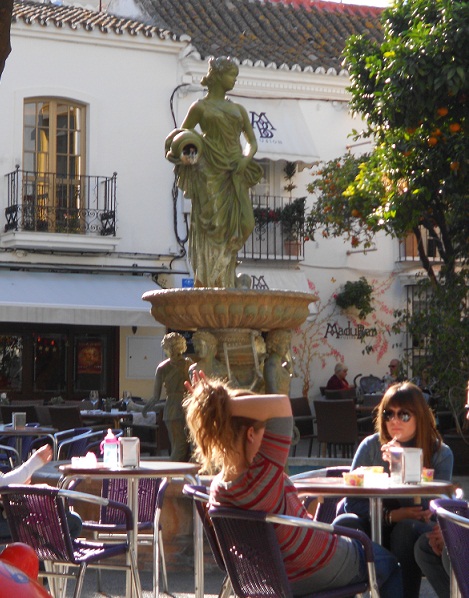
Estepona: is a coastal resort further south/west from Marbella, which has a very nice long modern promenade, but has managed to preserve its old town just behind the waterfront.
Estepona1

Estepona Promenade, with the Rock of Gibraltar in the distance
Estepona3

Estepona Old Town

Estepona2

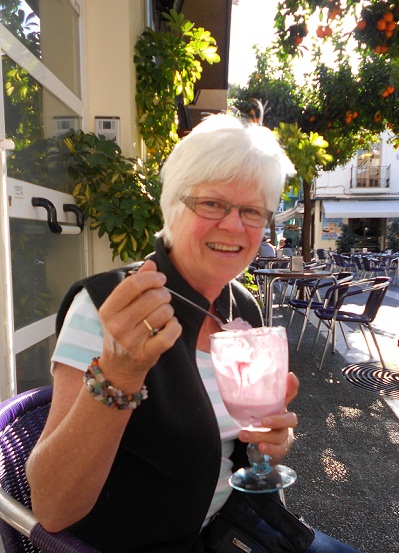
Yoghurt & berry sundae – healthy!

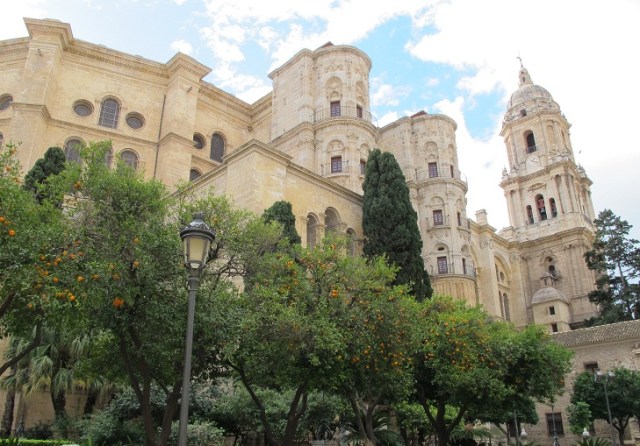
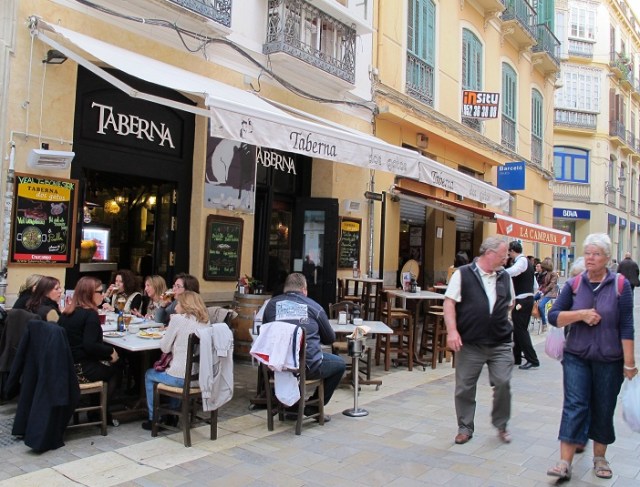
Malaga:  We took a bus to Fuengirola, then a train to Malaga, for a day out with friends from the campsite.  A tour of the city on an open top double-decker bus was followed by a stroll through the old town and around the Cathedral, and lunch at a bistro/bar.  Malaga is a very tidy, compact city, and great strides are being made for a new Metro system which should reduce congestion considerably.
Malaga1

Malaga’s mainly baroque Cathedral

Malaga2

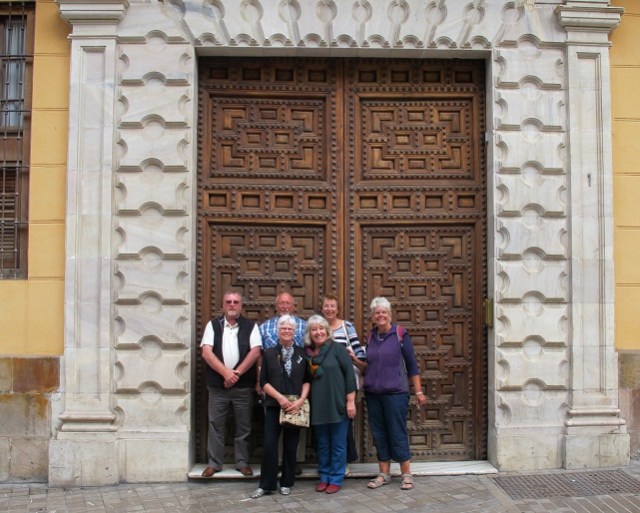
Malaga – day trippers looking for a bit of culture!
Malaga3

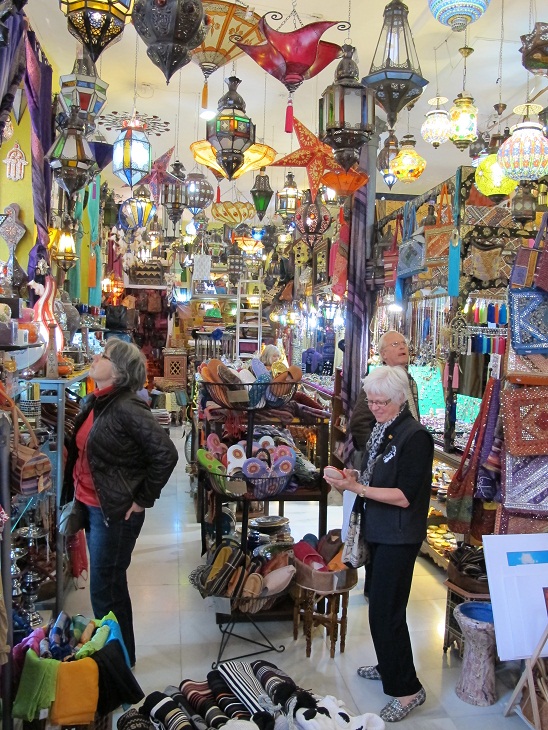
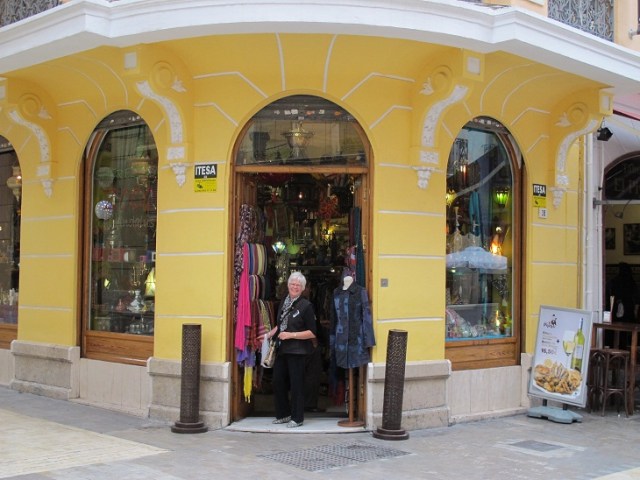
Malaga amazing gift shop

Malaga4

Malaga – inside the amazing gift shop
Malaga5

Malaga – looking for food – BJ and Nick

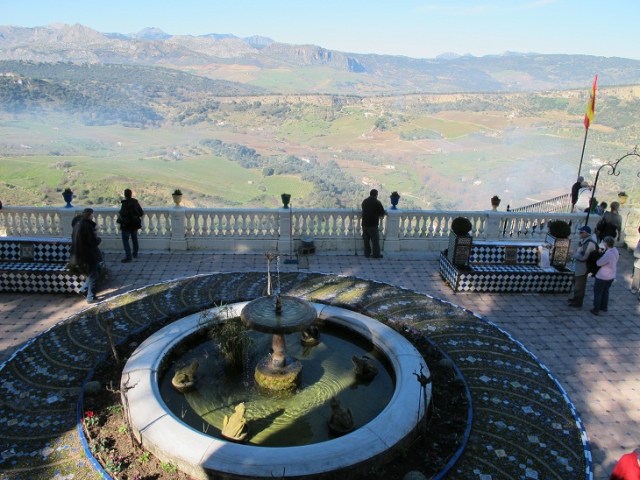
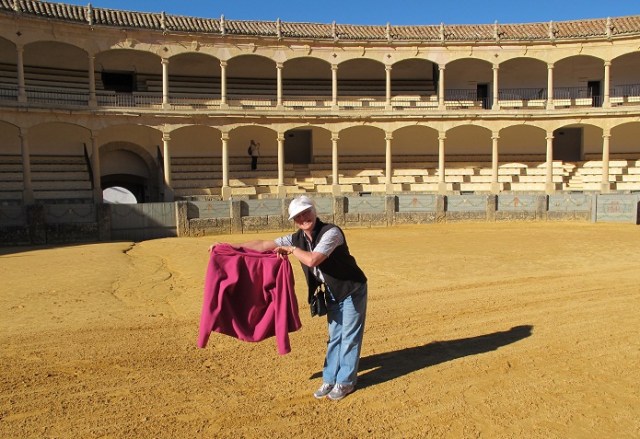
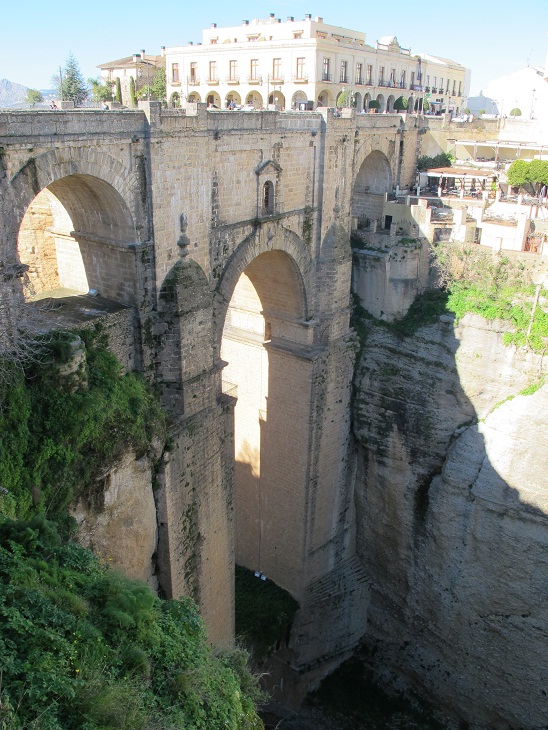
Ronda: is a small ancient city way up in the mountains behind Marbella.  We took a day trip by coach to visit here, which took nearly 2 hours to get there winding up through the mountains.  Ronda sits on an outcrop of rock in the centre of a basin surrounded by higher mountains.  A gorge cuts through the centre of the city, separating the old town (built by the Moors in the 8th to 15th centuries) from the newer part which dates from the 15th century onwards.  A spectacular viaduct/road bridge built in the 18th century spans the gorge, which is over 100m (330 ft) deep, and the centre part of the structure served as a prison in bygone days.  Ronda is also the birthplace of bullfighting in Spain, and still has the oldest and one of the biggest bullrings in the country.
Ronda1

Ronda – no charge!

Ronda2

Ronda – view from Casa Don Bosco terrace
Ronda3

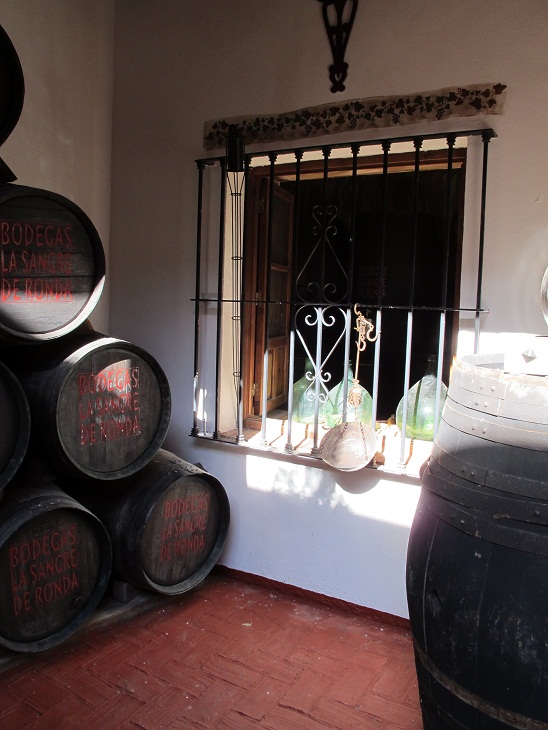
Ronda – Bodega we went to for wine tasting
Ronda4

Ronda – the “New Bridge” 17th century – our lunch restaurant on the right
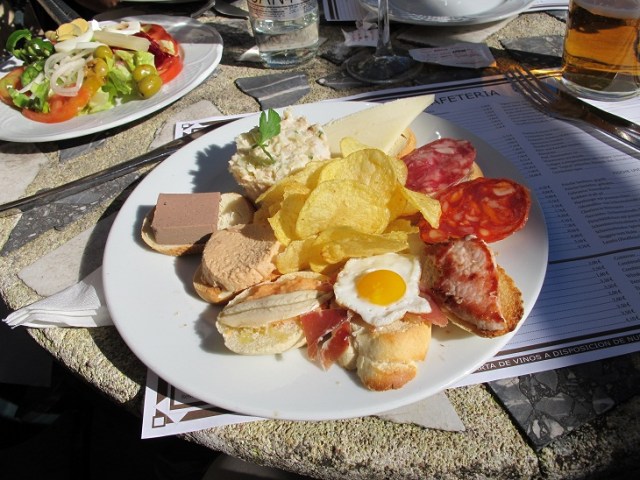
Ronda5

Ronda – mixed tapas for lunch

Ronda6

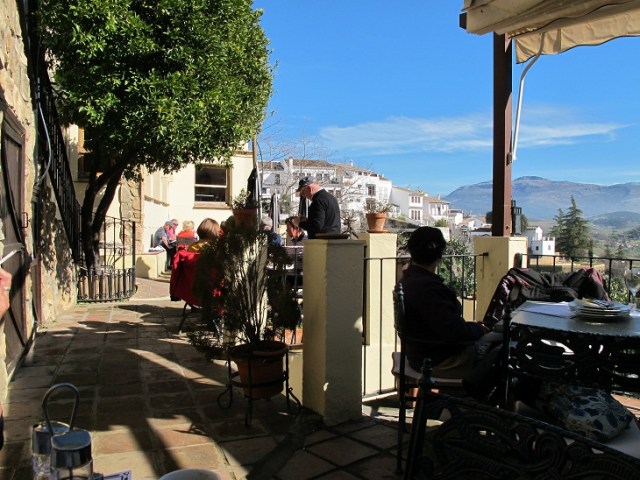
Ronda – terrace restaurant

We had a lovely lunch in the sunshine with spectacular views, beside the bridge at a bistro which is built on terraces for 3 levels down the side of the gorge.

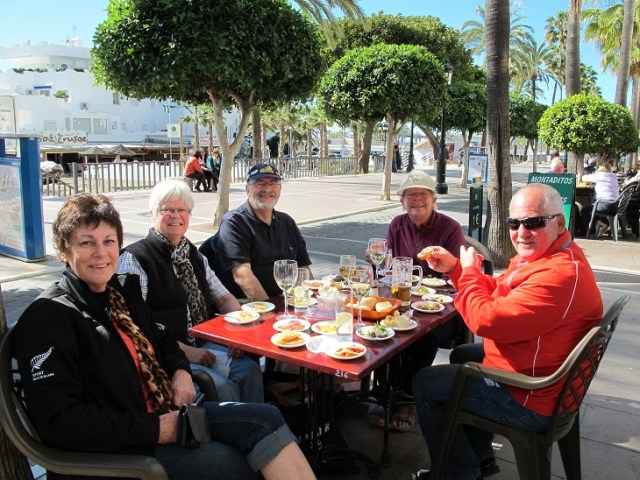
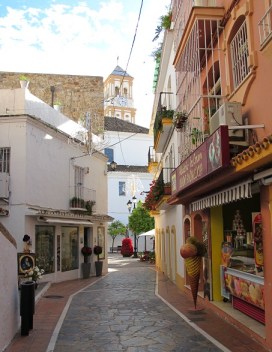
Marbella:  is the next biggest town on the Costa del Sol after Malaga, and we visited here a few times as it is not only handy but good shopping and very picturesque to go with it.  The Municipal Market is a favourite with us, and is open every day for fresh meat, fish, vegetables and deli stuff. We love wandering the old town of Marbella, especially the lanes around the Plaza de los  Naranjas (Oranges), plus a park off the promenade contains a permanent exhibition of statues by Salvador Dali is always worth a visit.
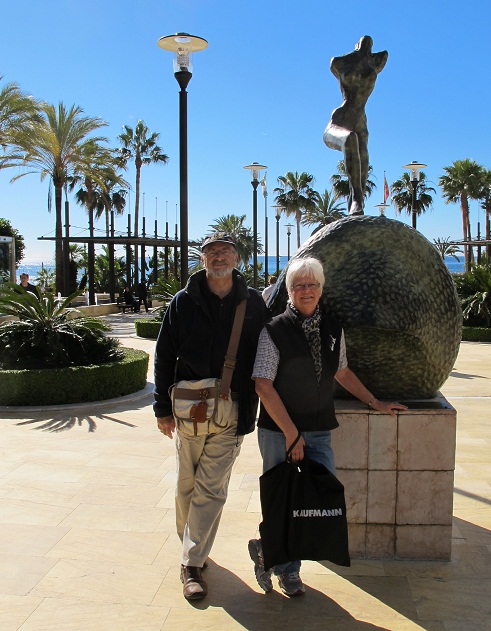
Marbella1

Marbella – Salvador Dali park

Marbella2

Marbella promenade – tapas lunch with BJ and fellow Kiwis Linda, Milton
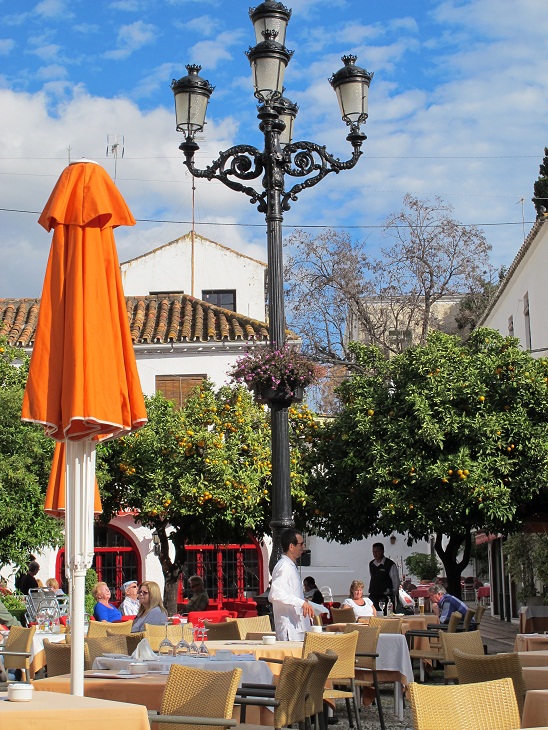
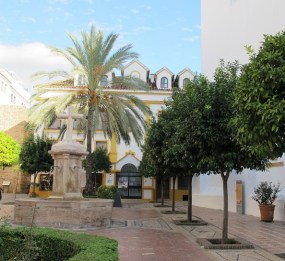
Marbella, Plaza de los Naranjas
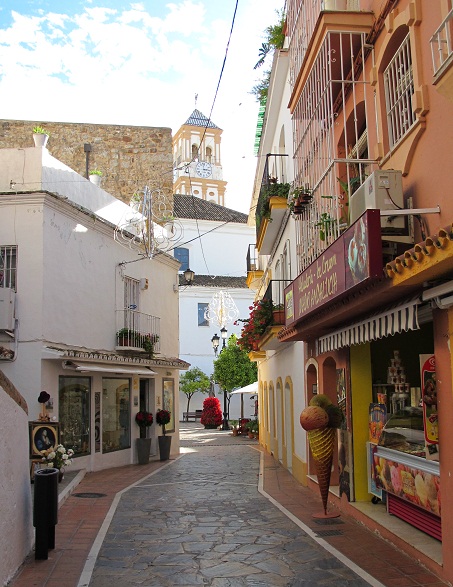
Marbella, Plaza de los Naranjas

Marbella old town

Marbella old town

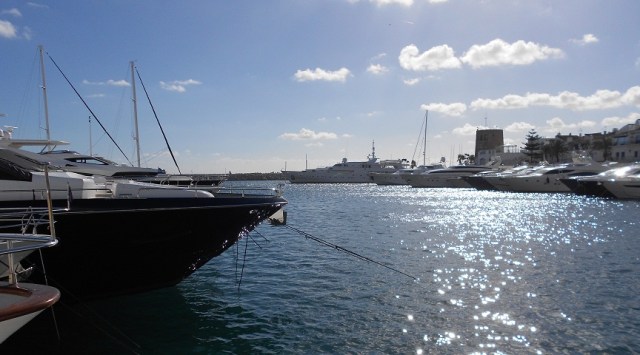
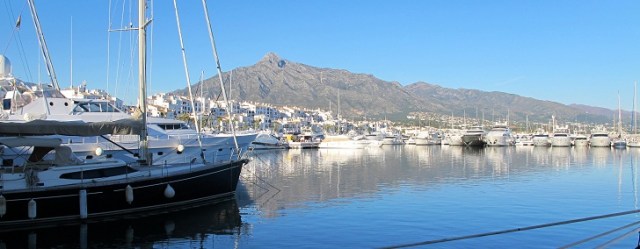
Puerto Banús: is the exclusive resort and marina/port of Marbella.  It was designed, developed and built by the architect José Banús, and the whole area is named after him.  All the boutiques, cafés, restaurants and apartments surrounding the marina are very upmarket and designed as one complex.  All the brand names are here of course – Gucci, Prada, etc., and lined up along the sea wall are large numbers of Ferraris, Porsches, Range Rovers, Aston Martins and Bentleys.  And the boats have to be seen to be believed.  The largest super-yachts are at the west end (of course) where the most exclusive boutiques and restaurants are, and get progressively smaller as you move east along the marina.
Puerto_Banus1

Puerto Banus marina

Puerto_Banus2

Puerto Banus marina – west end

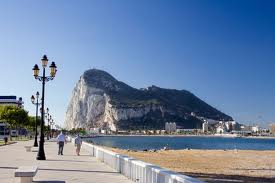
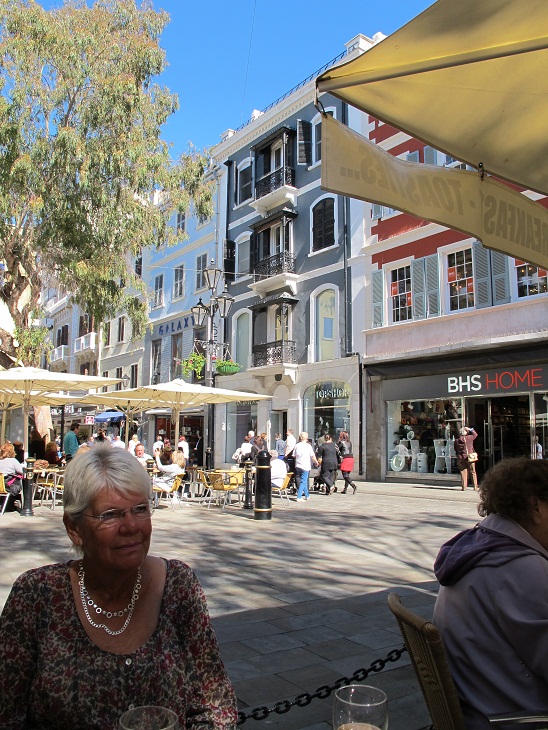
Gibraltar:  We enjoyed a day trip here with friends in their car.  Pure indulgence of course, to sample the English pub, café and shopping atmosphere of Gibraltar for a while.  We didn’t take many photos as we had been here before in 1991, and nothing much has changed except for being busier, and more spread out around the fringes.
gib1

Gibraltar from the causeway

gib2

Gibraltar – entrance to the casements area
gib3

Gibraltar lunch – BJ – (Big Jan)

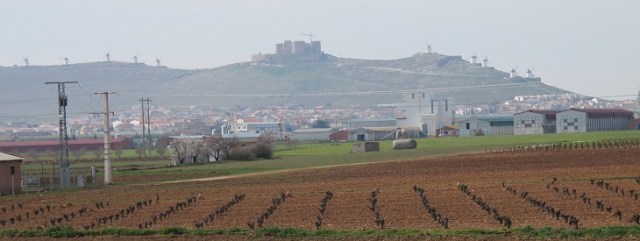
Toledo:  We left Marbella Playa on Friday 1st March and headed up through the centre of Spain, via Malaga and Cordoba, and around Madrid, to Toledo in La Mancha.  We didn’t stop in Cordoba as we had visited there before, and had an overnight stop in a small village (Santa Elena) in a National Park along the E05 highway.  It was very cold and frosty in the mountains, but it stayed dry for us the whole way north.  Along the way we circled around Madrid on the motorways, then travelled through La Mancha and saw some of the famous castles and windmills which feature in Cervantes’ adventures of ‘Don Quixote’.  Also lots of agriculture with huge areas of olive trees, almond trees in blossom, and hundreds of kms of grapevines (La Mancha claims to have the largest area of planted grapevines in the world, and we can quite believe it).
Toledo (1)

Consuegra, La Mancha – castles, windmills & grapevines

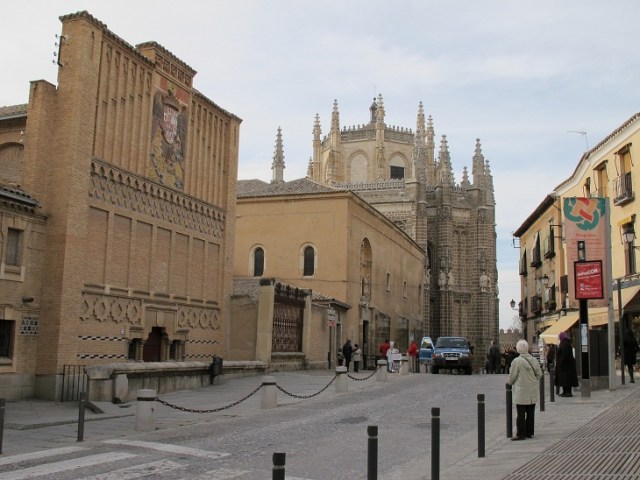
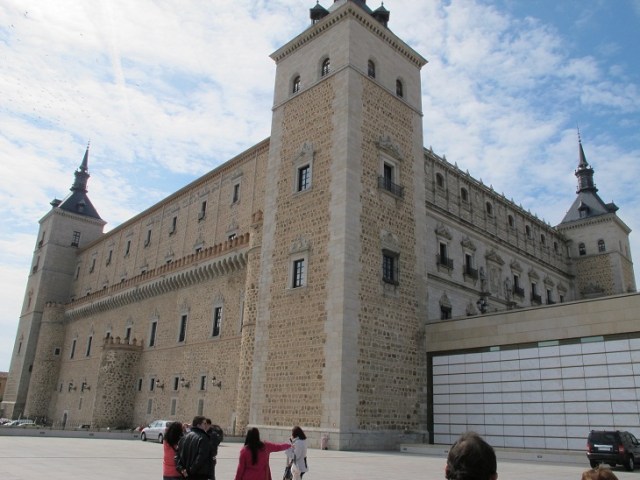
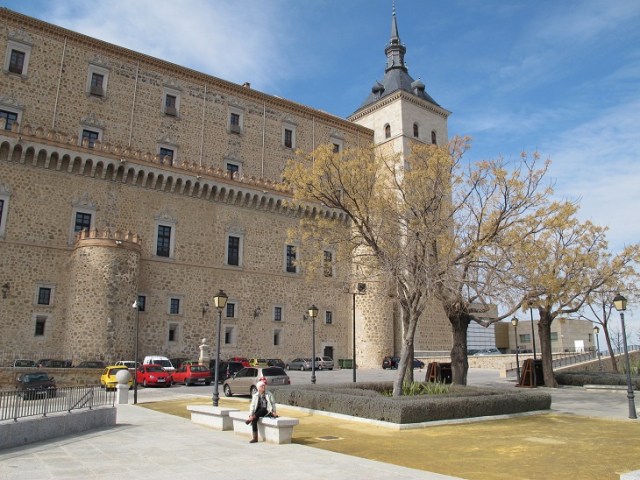
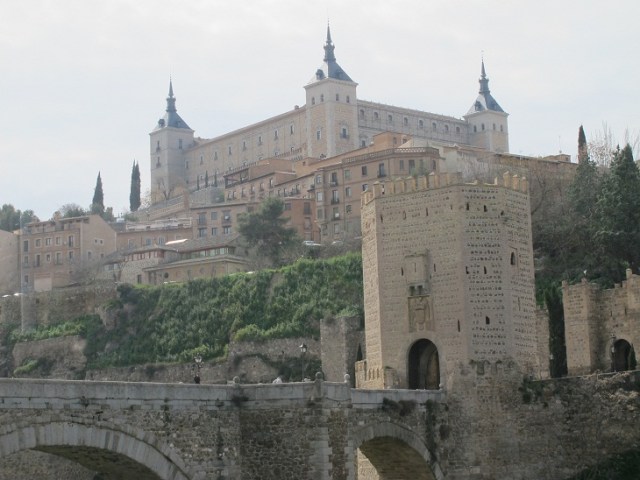
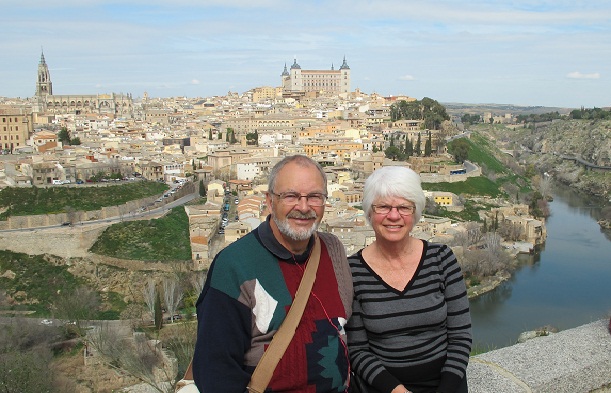
Toledo is the city from which Don Quixote and Sancho Panza set out on their adventures.  Although we had visited the city briefly some years ago, we spent two nights here and think we did it justice this time around.  The Alcazar is a magnificent building, mostly destroyed in the Civil War siege of Toledo in the 1930s, and rebuilt on the original site.  It now houses the Spanish Military Museum, showing the history of the military and the monarchy of Spain.  We spent most time just wandering the streets of the medieval city, enjoying the atmosphere and the cafes.
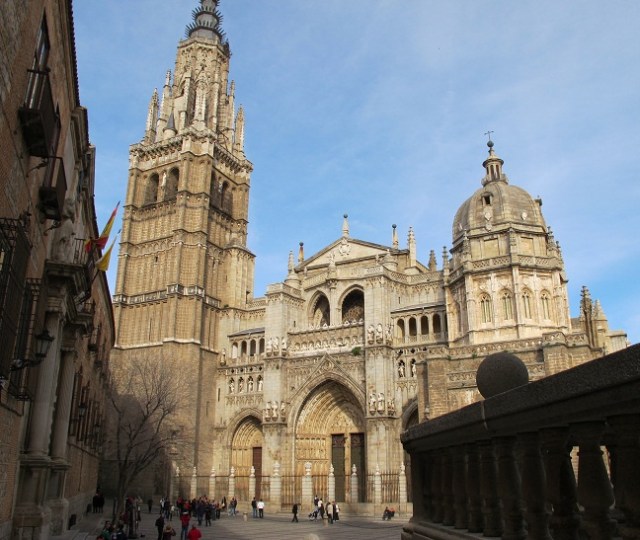
Toledo (2)

Toledo Cathedral

Toledo (3)

Toledo – School of Fine Arts & Monastery de San Juan
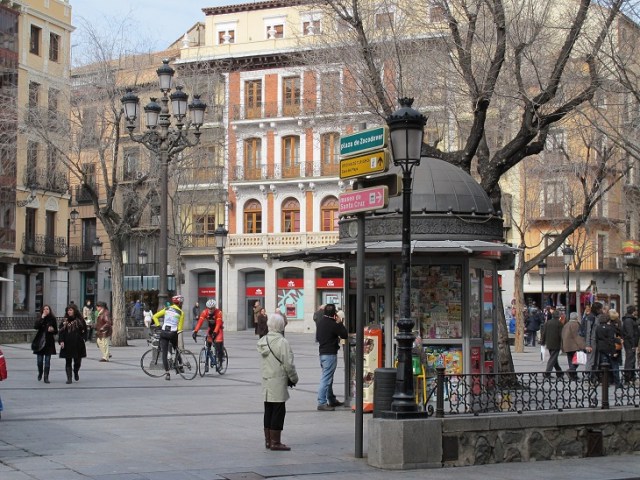
Toledo (4)

Toledo – Plaza de Zocodover

Toledo (5)

Toledo – the Alcazar

Toledo (6)

Toledo – Alcazar gardens

Toledo (7)

Toledo – Alcazar & Roman Bridge

Toledo (8)

Toledo – two more ancient monuments

The campsite in Toledo (Camping El Greco) was just down the river from the city, with heated toilet blocks etc., and a bus service from the gate right into the centre of the old town.  Very expensive though, at €30 per night.

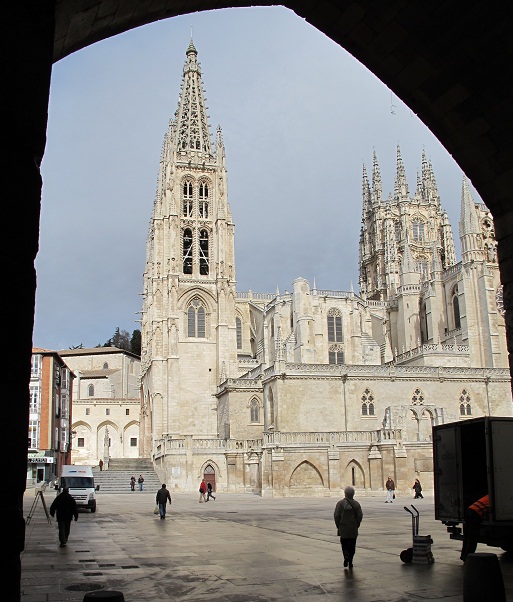
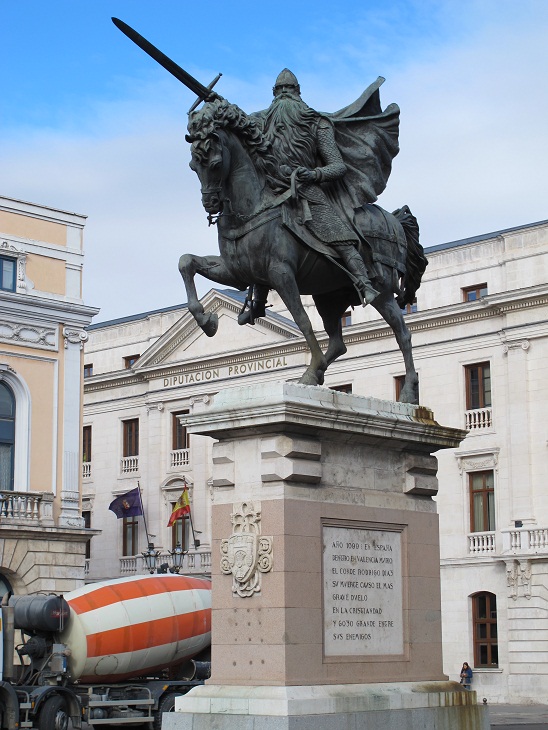
Burgos:  is the largest city in the north of Spain, at the cross-roads between the ancient east to west pilgrimage route to Santiago de Compostela, and the main trade route from France and the north coast, to Madrid and the south.  It is also the birthplace (and burial place) of the legendary medieval hero El Cid, and has the 3rd largest Gothic cathedral in Spain.  We found it a very pleasant provincial city, nicely laid out and great for walking and cycling.  The weather stayed fine for us, but walking around inside the cathedral was like being inside a fridge so we didn’t linger there too long.
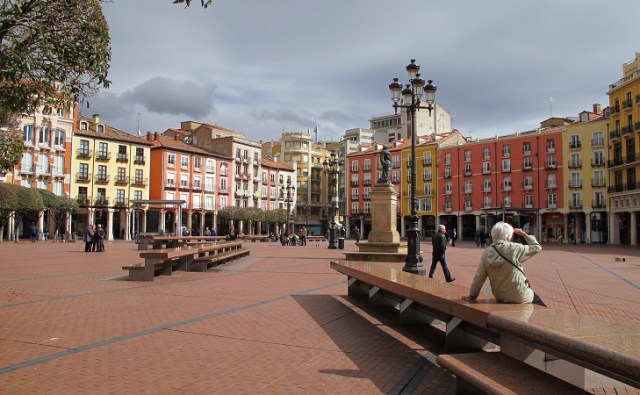
Burgos1

Burgos – Plaza de Mayor

Burgos2

Burgos Cathedral

Burgos3

Burgos – Monument to El Cid (doesn’t look like Charleton Heston though)
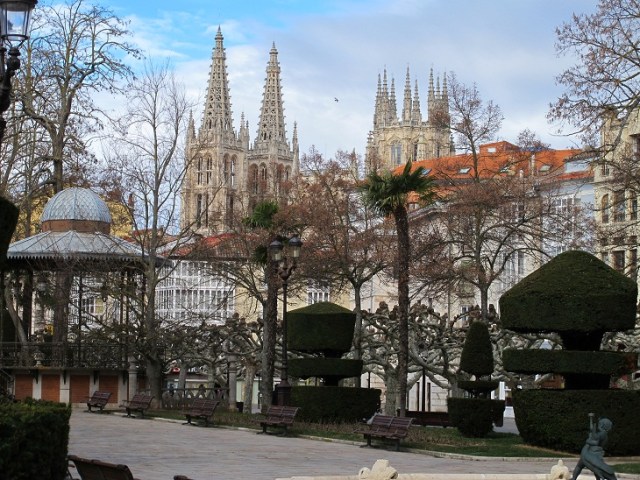
Burgos4

Burgos – Paseo de Espolon

Burgos5

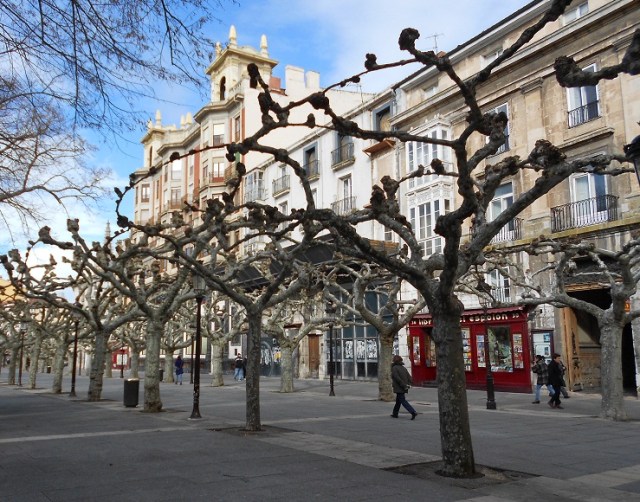
Burgos – Plane trees trained to join up
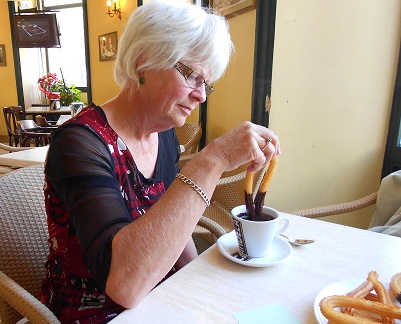
Burgos6

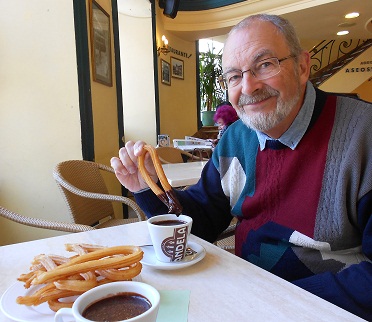
Burgos – churros & chocolate

Burgos7

Burgos – churros & chocolate

Nice campsite in Burgos (ACSI rate of €16.00 per night), heated toilet blocks, and a bus service from the gate into the city. We walked back to the site along the riverside in the afternoon – an easy 40 minutes on the flat.

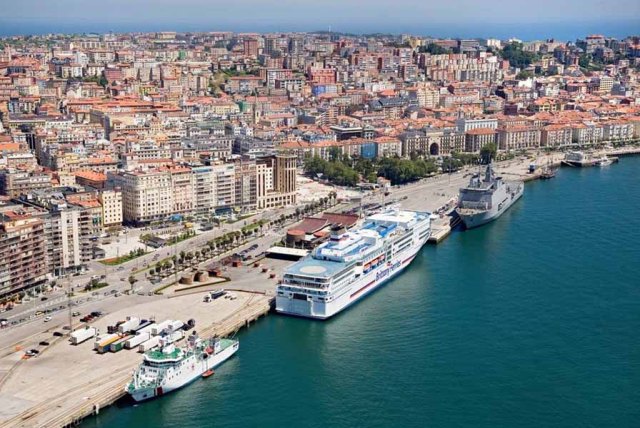
Santander:  The road north from Burgos to Santander took us over the eastern end of the mountain range of Picos de Europa with all the peaks covered in snow, but we had a nice sunny day to do this.  The roads throughout the Spanish countryside are very impressive – endless motorways (autovias) or dual carriageways, which are as good as most motorways elsewhere, and light traffic (except around Madrid).  There have been a lot of toll roads built in recent years and they are pretty much empty, which is not surprising when they run alongside perfectly good motorways which are free!  What a waste of EU funding.
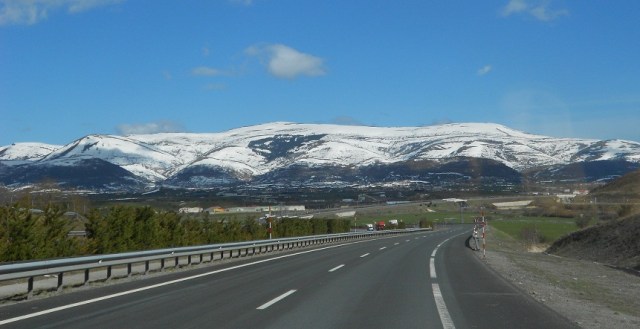
Santander (1)

Motorway E05 through the Picos de Europa

Anyway, we arrived in Santander at midday, checked in to the ferry terminal, then we were free to wander until 6.00pm.  We thought the city was very pleasant, especially as it was sunny and the temperature around 20oC as we basked in the sunshine at a café beside the cathedral.  The only drawback being all the shops closing up at 1.30pm for siesta, and not opening again until 5.30pm.
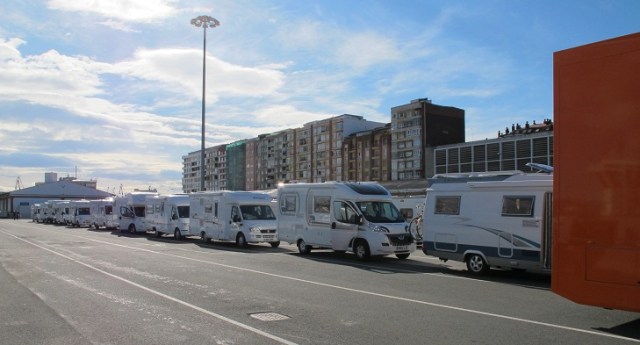
Santander (2)

Santander – queued up on the ferry wharf after check-in.
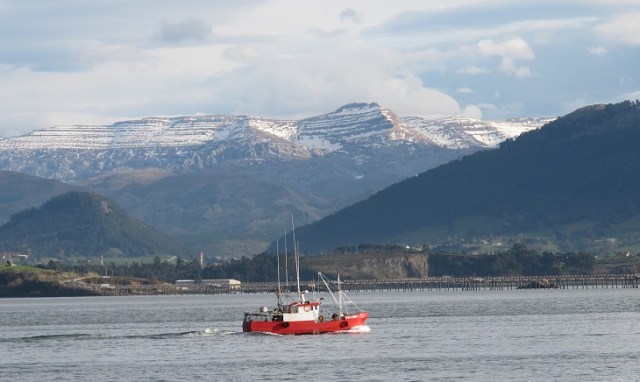
Santander (3)

Santander – view of the mountains to the south
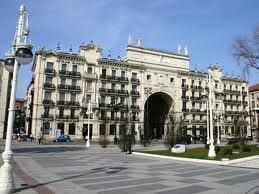
Santander (7)

Banco Santander Headquarters

Santander (8)

Santander – Brittany Ferry Pont-Aven

Talking to other caravan and motorhome owners on the wharf we heard lots of stories of foul weather, including snow and torrential rain, being experienced by others who had driven up from places like Valencia and Benidorm, and even from Costa del Sol only a day or two behind us.  We were extremely lucky with our good weather the whole way. The ferry started loading at 6.00pm and we were on board by 7.00pm.  We dumped our stuff in our cabin, then went to have dinner and treated ourselves to a meal in their top restaurant as a farewell to Spain.  The buffet entrées were magnificent – heaps of smoked salmon, prawns, scampi, patés, meats and salads, then mains of fillet steak (Mike) and rack of lamb (Jan), and buffet desserts and cheese board.  All washed down with a very nice Côtes du Rhône Village.
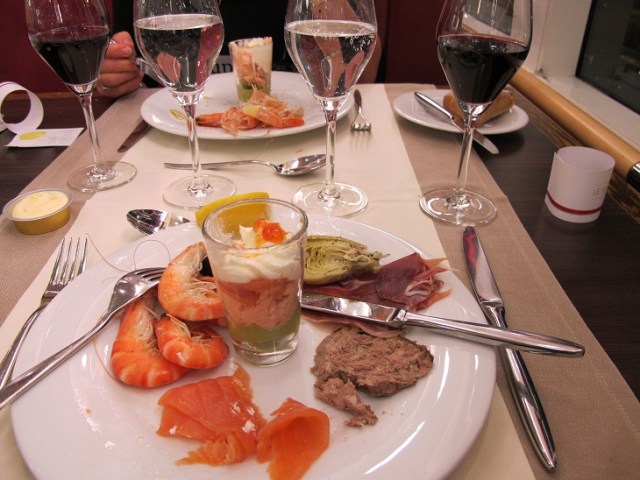
Santander (4)

Brittany Ferry – dinner entrees (starters)

Brittany, then England again:  We had a very smooth crossing of the Bay of Biscay and the cabin was quite comfortable.  We woke in the morning to see the misty coast of Brittany passing by on the starboard side, with the lighthouse and the ruined Abbey of St Mathews Point on the headland of one of the most western points in France.
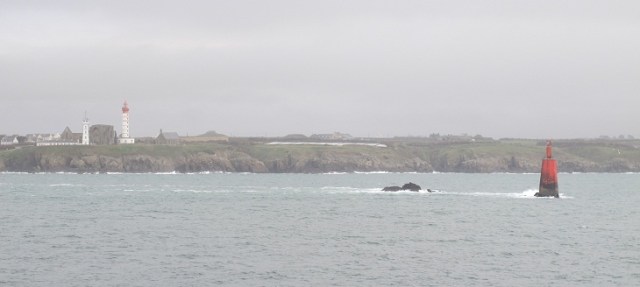
Brittany St Mathew Point 1

Brittany – St Mathew Point lighthouse
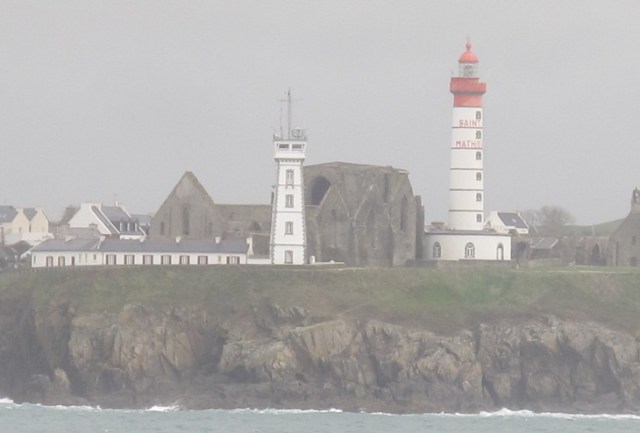
Brittany St Mathew Point 2

Brittany – St Mathew Point lighthouse and abbey

We then spent the day reading, eating and strolling the ship (plus a siesta) before arriving in Portsmouth at 7.30pm.  We were one of the first vehicles off the ferry, and guess what !?  – the weather was exactly the same in England as when we left in November – cold, dark, misty rain and fog. We drove to the only campsite open within 100 km of Portsmouth in the New Forest, and left again the next morning for our booked campsite at Denham near Uxbridge.
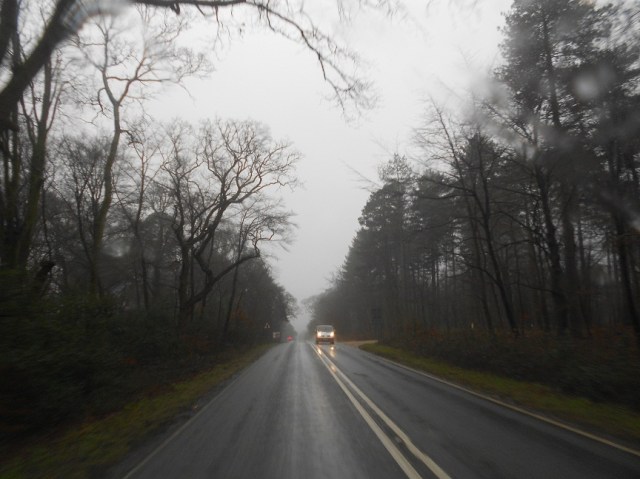
Uxbridge1

English spring day – New Forest

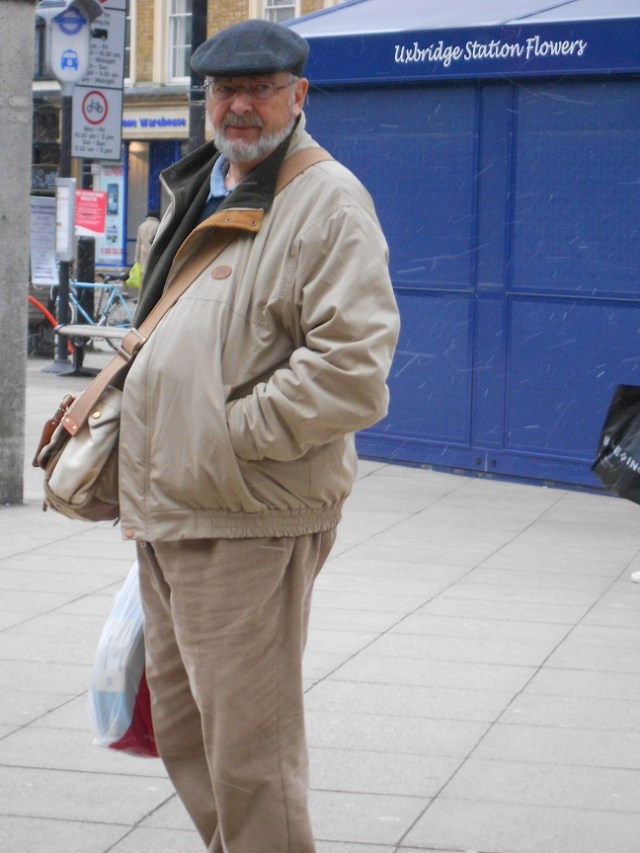
Uxbridge2

Shopping in Uxbridge – white streaks are snow flurries

We’ve been here for one week, and so far have had rain, snow and bitterly cold winds, plus some sunshine and heavy frosts, so we are very much looking forward to keeping warm and dry for a month of house and cat-sitting near Guildford.  We start this tomorrow.

Ciao for now!
Posted in Uncategorized | Tagged , | 2 Comments

January 24, 2013 – d’Hobby Wine & Food Society

The d’Hobby Wine and Food Society:   We have been trying local food, wine and beers along the way during our travels, so this section pretty much consists of notes of a purely self-indulgence nature.  If you’re not bothered with this (or a touch envious) then you should move on to other chapters.

Note – hover the mouse/cursor on a picture for a description, or click on the image for an enlargement.

Culinary highlights of the trip so far are:

Helsinki  (Finland)

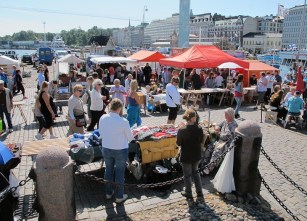
Helsinki has two markets on the waterfront.  The outside flea market has food stalls mixed in amongst those for produce, arts & crafts and souvenirs.  The food offered is either local seafood or ethnic, and is very good value, and interesting eating.

Helsinki5    helsinki1

Helsinki6

There is also the old covered market further along the wharf which is basically a huge food hall with an amazing variety of food displayed – everything from Asian, Scandinavian and Eastern European specialities, to hamburgers and hot-dogs.  It is only open from early morning until mid-afternoon, and it seems like everyone in Helsinki eats here for lunch.

helsinki2    helsinki3  helsinki4

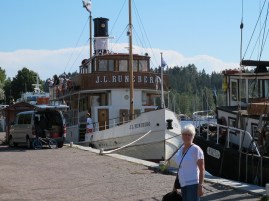
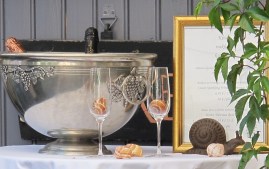
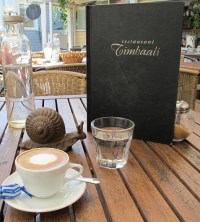
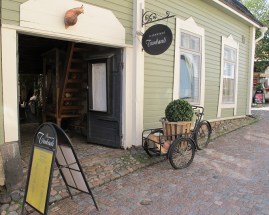
Porvoo (Finland) – this is a quaint, historic town east of Helsinki along the coast.  We went there on a day excursion on a 100 year old steamer, and had lunch at a unique restaurant in Old Porvoo Town.   Restaurant Timbaali promotes itself as the only restaurant in Finland (and possibly Scandinavia) that serves and specialises in ‘escargots’ (snails), and the creatures figure throughout the premises and décor.

Porvoo1     porvoo2   porvoo3     porvoo4

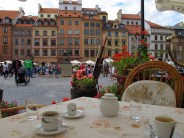
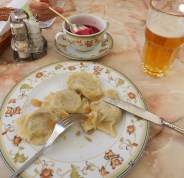
Warsaw (Poland) – for one lunch Jan had local speciality Barszcz (more commonly spelt ‘borscht’) which is warm beetroot soup with ravioli.  Ingredients include red beetroot, onions, garlic, and other vegetables, such as carrots and celery or root parsley.  Mike had Pierogi – dumplings stuffed with cabbage, onion and pork meat, with pork crackling croutons, fried in olive oil.

warsaw3   warsaw2   warsaw1

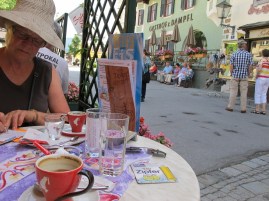
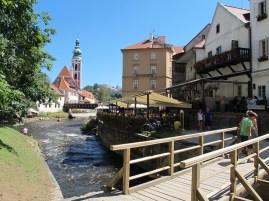
Cesky Krumlov (Czech Republic) – For lunch here we shared deep fried camembert with a berry sauce, and potato cakes.  Another scrummy lunch we had in Austria was open toasted sandwiches – mozzarella & tomato for Jan, and ham & cheese with bacon on top for Mike – double helpings served on conjoined dishes, and eaten with knife & fork.  Cholesterol free ? – of course!

johann1    Cesky05

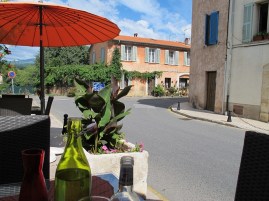
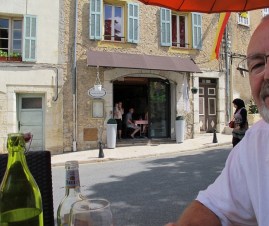
Montauroux (Provence) – One memorable lunch we had in this hill village in Provence was at a road-side bistro/café where the waitress had to dodge the traffic to cross the road each time to serve our table.  Although the food was simple, it was superbly cooked and presented.  Our entrées were different terrines (one was seafood, the other duck), presented beautifully just turned upside down from a mould, and a piquante olive oil drizzled over, accompanied by fresh baguette (of course).  The mains of salmon for Jan and a 200g fillet steak with Béarnaise sauce for Mike were ‘melt in the mouth’ moments.  All washed down with a chilled local Côte de Provence rosé (of course).

montauroux1     montauroux2

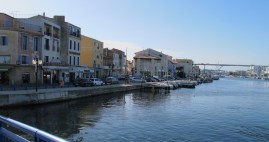
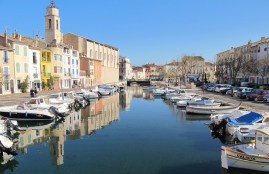
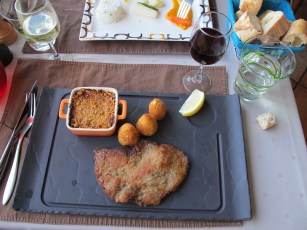
Martigues (Provence) -Lunch at a waterside restaurant was a highlight of our visit here, matched only by the stunning scenery of the town and harbour.  Jan had a plump white fish with pumpkin puree and fresh vegetables, beautifully presented.  Mike had a very tender Weiner Schnitzel, served on a sizzling slate platter, with crunchy potato croquettes, and a baked ratatouille in a separate dish.  Both these dishes were on the Menu du Jour, and included wine and water for €8.50 each !

martigues3    martigues4 martigues1     martigues2

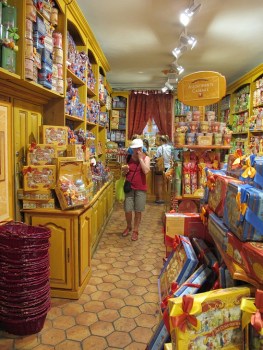
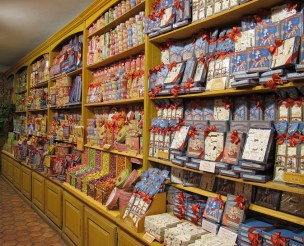
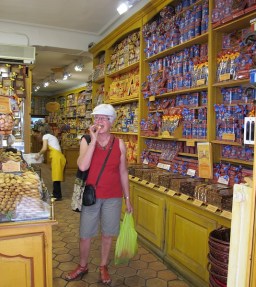
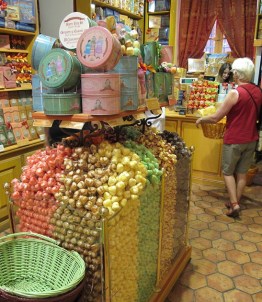
Aix en Provence – One of our favourite cities in the South of France, with interesting produce and flower markets on different days of the week, and in different squares/places.  We stumbled on a small shop off one of the main squares which specialised in their own brands of confectionery and biscuits.  Not only did they taste good, and we bought  a bundle of stuff, but the shop itself was very photogenic:

Aix1

Aix4      Aix3    Aix2        Aix6

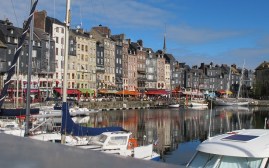
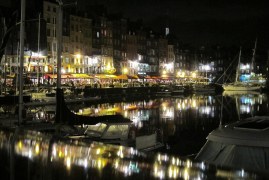
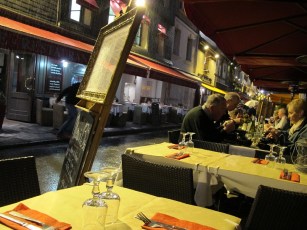
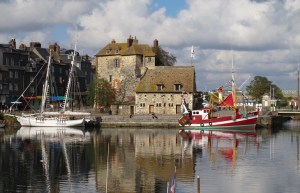
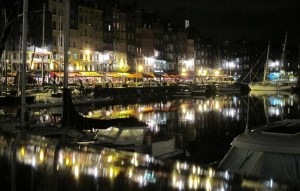
Honfleur – The last memorable meals we had out in France were in Normandy, where we decided to sample some of the local specialties. Dinner was by candlelight on the quayside, with ‘marmite de pêcheur’ (thick seafood stew) for Jan, and ‘confit de canard’ for Mike, with mousse chocolat for dessert.  The following day we shared crépes for lunch, again on the waterfront.  First course was a ‘galette’ – a savoury crépe with ham & cheese filling, and second course the traditional dessert crépe with citron & sucré.

honfleur3    honfleur2 honfleur1     honfleur4

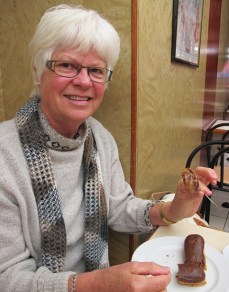
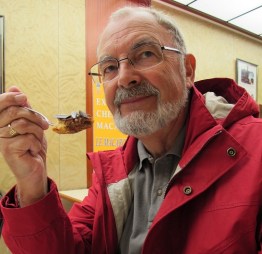
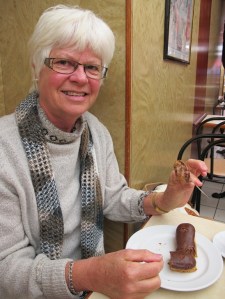
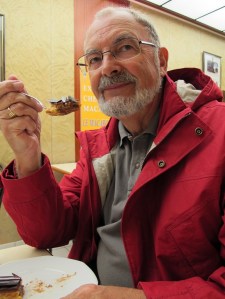
On the road, or exploring towns and villages on foot, morning teas tend to be espresso coffee with some hot milk on the side (called a ‘noisette’ in Provence).  Jan has acquired a taste for good espresso, but only has a single shot, while Mike usually gets a double.  Coffee is supplemented with either a cinnamon bun or an almond croissant (shared of course).  In France we made it a bit of a mission to find the best éclair – the chocolate ones here tend to be filled with chocolate mousse and are pretty scrumptious.  So far it’s a tie between the ones we had in Quiberon in Brittany, and Honfleur in Normandy.  A great deal more sampling is needed to give any credibility to this research though.

quiberon1     quiberon2

A favourite home-made lunch on the road is an open shrimp sandwich – a base of lettuce and tomato, then a pile of shrimps, heaped on a crisp-bread or a ½ wholemeal roll, with thousand-island dressing. Yummy.

Spain

We have been enjoying a variety of wines at very reasonable prices in Spain, for example Rioja (tempranillo/granacha blends) from € 1.29 for white label, to €2.05 for black label (Reserva), and some very good Rosés (Rosada) for € 1.79.    (€1.00 = NZ$1.59)

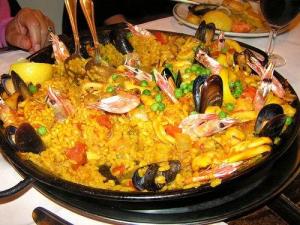
We have also been experimenting with our own Paella recipe from NZ with slightly different ingredients, mainly because we forgot to bring our printed recipe with us, but so far the variations have proved to be very palatable.  It helps of course to have good ingredients like local Spanish chorizo, paella rice, herbs, shell fish, etc. and to cook in a good paella pan on a round BBQ grill.

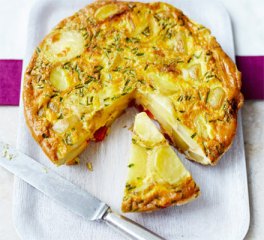
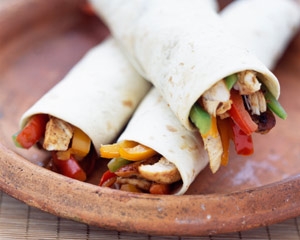
We have also learned how to make good Tortillas.  We had lessons from the campsite restaurant chef at Elche to cook a variety of these Spanish omelettes with onion and potato and various other fillings and garnishes like chorizo.  We have also been experimenting with Fajitas – stir fried chicken or beef with capsicums, onions etc., and served sizzling hot with tortillas, guacamole and sour cream.

paella   tortilla

The other unusual thing that Mike has really enjoyed is La Morcilla de Burgos – a special black pudding produced in the Burgos region with rice as a prominent ingredient.  Slices of this fried, and served with blue cheese*, are a great tapas recipe (no cholesterol evident, of course), or with a bacon & egg breakfast.

We have also visited an Iceland store in Fuengirola, who stock mainly British foods – amongst them Melton Mowbray pork pies, along with good English cheddar, and even pickled onions.  As a result Mike has enjoyed a few ploughman’s lunches recently, instead of the standard ham, cheese, tomato & lettuce baguette.  We also found good English marmalades, teas and peanut butters.  However, the one thing we haven’t found anywhere yet is almond butter, which we find very strange in countries such as France and Spain who grow thousands of tons of almonds for export, but don’t seem to crush them at all, and also appear to import all their peanut butters.

Bon appetit !!

*Luscious Cambazola soft blue cheese from Germany is available from our local supermarket deli section. 

Posted in Uncategorized | Leave a comment

January 19, 2013 – Nomadic life

We’ve been here at Camping Marbella Playa for a month now, and just extended our time for another month, until mid-February.  With the UK and half of Europe under snow this is the best possible place to be, and we are still getting fine, sunny days with temperatures around 17oC to 19oC.  Last night was the single exception so far – strong westerly winds and rain showers, but the sun is shining again now, although it is still breezy.

Our explorations over the past 4 weeks have been restricted to local towns and villages along the Costa del Sol, relying on buses and trains, or the goodwill of friends we’ve made on site who have their own transport.  Marbella, Puerto Banus, Estepona, Fuengirola, Benalmedena, Mijas and Malaga have been ticked off the list so far, with planned trips to Ronda, Gibraltar and Cadiz still on the board. We’ll talk a little more on these in a future update, meanwhile this issue is the one promised about our experiences on travelling by motor-home around Europe (not about the places we’ve enjoyed visiting).

Campsite facilities:  These vary considerably, from modern and sparkling clean, to old and grotty.  We rely on the comments in the camping guide books to a large extent, and pick the best available, and they have proved pretty reliable.  However, the campsites all charge for things differently.  Some make a charge (about € 0.50c = NZ$1) for showers, in coin operated boxes which control the hot water and push buttons for flow.  This will usually get you 3 minutes worth, or sometimes (pure luxury) 5 minutes.  The best sites include showers, electricity and WiFi in the one daily charge, others charge separately for each item, which can make it quite expensive.

Travelling in high summer is very expensive anyway, with campsite charges ranging from €21.00 (very basic facilities) to €35 per night for modern, immaculate sites. It started to reduce as we moved out of high season – typically €14 or €16 per night as discounted rates, but even so we got charged €29.00 for one night at a seaside campsite just outside Marseilles in October, with pretty basic facilities, but it was the only one open in the area.

Washing machines and dryers usually attract separate charges, with only one occasion so far where they were free of charge.  It can cost as much as €8 or €10 to do a load of washing and drying in wet weather.

Level pitches are a rarity in Europe, although quite common in UK.  So we have a set of ramps to level up the van, although sometimes these are not quite enough, at which point you just make sure your head is at the high end when you go to bed !

Many European campsites have hedges between pitches which gives an element of privacy, and lots of trees planted for shade in summer.  Terrible in autumn and winter of course, when the van gets covered in leaves and muck off the trees, especially when there is wind and rain.  Our awning is the extendable type, with poles in the extended corners which let down.  This gives good shade when the sun is high, but no shade as it sinks in the evening.

awning1

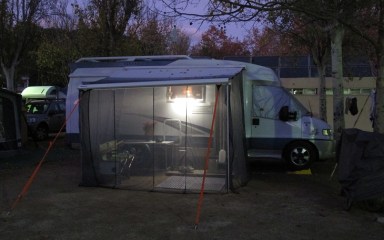
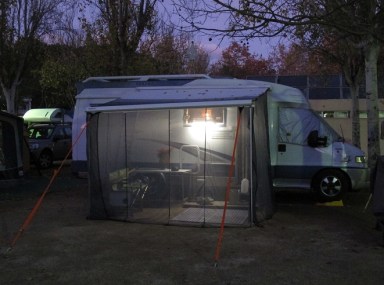
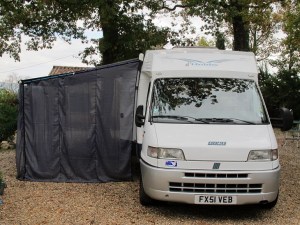
We recently bought some clip-on sides and front in the UK but, as with most things mobile, these were quite expensive, and we didn’t have the weather to try them out while travelling.  They have now proved their worth in Spain when we settled in one spot for a few weeks, providing that extra room which, although not real privacy, gives a sense of enclosed space.

awning2Even so we haul in the awning etc. when the wind gets up.  If it takes off it can inflict some real damage to the van (as some other campers have found to their cost), and it only takes a few minutes to dismantle.


Blue, Pink & Purple jobs

The following is not intended to be sexist, but a necessity of nomadic life.  You need designated chores for boys & girls on tour, known as blue and pink jobs (with some purple jobs to cover disagreements & disputes).

Blue jobs (for boys): anything mechanical or electrical; TV & radio; anything to do with toilets (emptying tanks etc.); water and waste tanks – filling, emptying and cleaning; dish washing; BBQ; packing up the outside for a move.

Pink jobs (for girls): cooking; washing; cleaning (including climbing on van roof); packing up the inside for a move.

Purple jobs (shared):  some cooking, esp. paellas, BBQs, breakfasts; driving; navigation decisions (yeah, right!).

Gas & Electricity:  The European Union bureaucracy is very good at making rules and laws about such critical issues as the shape of bananas for sale, or the allowable capacity and dimensions of lawn mowers, but they seem incapable of sorting out a standard for gas bottles and fittings in the EU zone.  Every country seems to have different standards, and few are compatible.

We started out with a French “cube” of propane* gas, and bought a UK bottle as a partner for it – they at least have the same connector.  When the French bottle ran out in Norway, we switched to the UK bottle, but had to dump the French bottle and buy a Norwegian bottle and a Norwegian connector as a backup (which we understood is the same as in Spain).  However, when the English bottle ran out, fortunately in the UK, we found the Norwegian connector was faulty, which we got replaced by the UK agents.  We also got a replacement UK bottle, so we still have the Norwegian bottle in reserve.  (Keeping up so far?  Good).

It became apparent that the whole gas thing is a potential problem wherever we go, and we have relied on it so far for all our cooking and heating.  However, we pay for electricity at every site we stop at, so have now invested in electrical appliances – kettle, hot-plate, heater, toaster, neon-tube for awning light, etc. so we are less reliant on the gas.  This is working out well so far, and our use of gas is now minimal.

Most campsites provide 10, 16 or 20 amps of electricity, and we can get by comfortably on 10 amps if we don’t have too many appliances on at the same time.  However there are still a few sites, mainly in France, who only provide 5 or 6 amps of electricity, which is hopeless.  Most caravans or motor-homes need at least 10 amps nowadays, with all the modern appliances on board, and 16 amps is comfortable.

*Propane is preferred to butane as it doesn’t tend to freeze at low temperatures.

Language: This generally hasn’t been a big problem as we get around Europe.  Many people speak a little English, some are really fluent – especially the Dutch, Belgians and many Scandinavians.

Our biggest problem has been supermarket shopping, especially in countries whose language is totally foreign to us.  We can get by in French, Spanish, Italian and, to a lesser extent, German, but the Scandinavian and Eastern European languages have stumped us completely.

And it doesn’t help when similar goods are placed in supermarket shelves too close together, and you buy what you think is the right product, but find out later it is something quite different.

Mike can attest (twice now) that runny yoghurt is no substitute for milk in coffee !

And Jan has actually enjoyed rice pudding with blueberries on her cereal, thinking she was getting yoghurt.

Travels (Trials) with Emily

We bought our Garmin GPS with us and loaded UK & Europe maps when we got here, but it developed a problem and wouldn’t work while it was plugged in to the cigarette lighter socket in the van – it thought it was on-line for updates.

In the end we bought a new Garmin Nuvi 2515 in the UK from John Lewis, with UK & Europe maps already loaded.  This works really well 95% of the time.  The other 5% is the interesting part.

Emily is the (virtual) lady who resides in our GPS and guides (!) us through the countryside of Europe.  She has a lovely refined English voice, and never gets angry.

We normally turn on the following options:

  • Avoid toll roads – this still allows you on to free motorways etc., but avoids toll sections.
  • Avoid gravel roads
  • Choose quickest route (as against ‘shortest route’, which can cause all sorts of extra detours down narrow lanes and tracks).

Once we programme in a destination, which can be a postcode or a street address in the UK, or a map reference or an address in European countries, Emily has some fairly fixed ideas on how we might get there.  We get presented with up to 3 optional routes, depending on whether we have selected ‘shortest route’ or ‘quickest route’ in the main settings.  Unfortunately there is no setting for ‘optimal route’, and we feel the other missing setting is “we are a motor-home over 2m wide, not an off-road 4×4 !”.

Emily’s favourite trick seems to be to take diversions on to narrow, minor roads for no apparent reason.  As an example, we will be happily trundling along a nice wide main road which by-passes a large town, and she will tell us to take a turn off to the left or right, and suddenly we are right in the middle of town, taking turns down narrow streets, some of which are one-way (and the wrong way), or blocked off as dead-ends.

On more than one occasion she has tried to take us on to a motorway which is still under construction, and there was the memorable trip we had on a 10km detour around a small town, along narrow country lanes and through outlying hamlets, when we could have driven on a nice wide boulevard straight through the town centre.

Jan now always has a detailed road map on her lap as we drive along, and when Emily gives directions off the main route we check the map first, and also physically take a look down the road she wants to go before either accepting or rejecting the change of direction.

However, another annoying GPS trait is when you deliberately choose to detour off the programmed route, the GPS will always try to take you back to the original route, and will be constantly wanting you to turn off your new route (often on country lanes) to go back to the programmed route.  When this happens we either just ignore it, or turn it off for a while.  It will eventually figure out that you are now past redemption, and accept our chosen path.  What fun!

Talking to other travellers, the hiccups we’ve had seem to be common to all or most GPS’s, and we occasionally get taken along some very interesting roads we would never have thought of, and sometimes there is no logic to it at all.   We get to see some fascinating countryside as a result, and so what if we go on detours – we get there in the end.

Some people have bought the map software versions specifically for trucks & buses, thinking it will avoid narrow roads, but these don’t seem to be any better.  One of our friends on site here has the truck version, which has their van dimensions programmed in, and it still took them on a road with a low bridge they couldn’t possibly get under !

In summary we would not be without the GPS, but don’t rely on it entirely.  You still need to use your own judgement, and don’t go blindly down narrow roads following instructions.  Look first!

Rant over.  The next issue, with a lot more pics, will be devoted to food and wine – subjects very close to our hearts (and stomachs).

Caio for now!  Mike & Jan

Posted in Uncategorized | 1 Comment

December 23, 2012 – Costa del Sol, Spain

To all our family and friends out there in the world:
Merry Christmas and a Happy New Year to you all,
from the Costa del Sol in Spain !
Merry Christmas, 2012

Sorry no pressies or cards this year – we have decided (for purely selfish reasons), to treat ourselves to 3 nights in a resort hotel just along the coast, along with 2 other couples from the campsite, from Christmas Eve until 27th December.  Luxury for us is a large bedroom, an ensuite bathroom and all inclusive food and drinks !!

Another 2 weeks have gone by and we are finally settled on the Marbella Playa campsite for at least a month – this gives us a 50% discount on campsite fees, which is very worthwhile.   We are booked in until 20th January, and will have to decide then whether to stay on for longer, or to move on again.  We are having lovely weather, and it is forecast to continue over Christmas week – clear sunny days, little wind, and around 20oC each day.

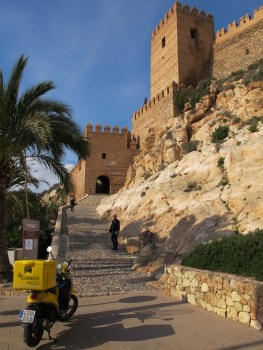
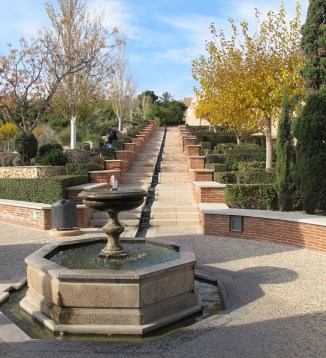
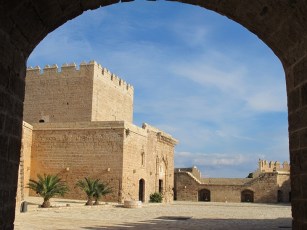
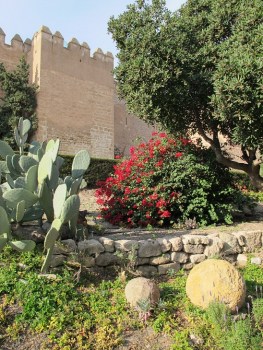
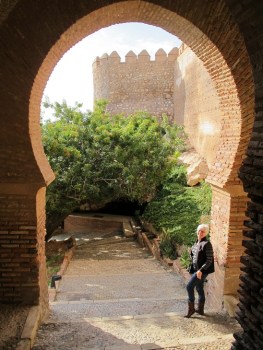
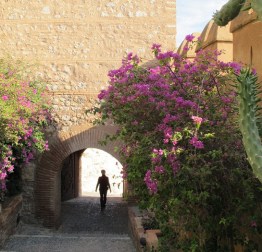
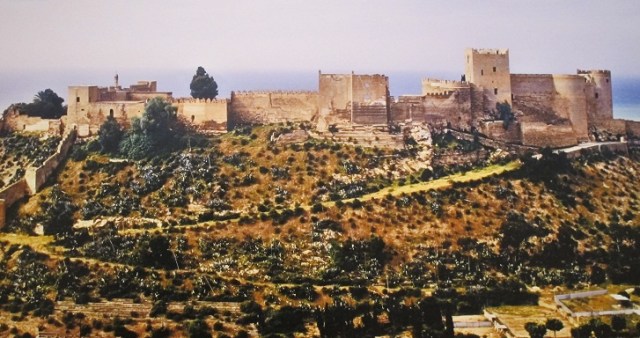
After leaving Elche/Alicante we stopped in Almeria for 2 nights, and explored the old Alcazaba (Moorish castle) and gardens on the hill overlooking the old town, topped by a later Christian castle on the summit.  Lovely surroundings, with ornamental gardens and fountains, and spectacular views all round.

Alcazaba view, Almeria

Alcazaba, Almeria      Alcazaba Moorish Gardens, Almeria

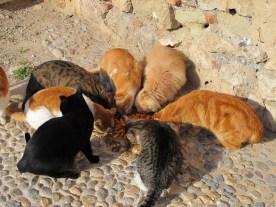
Pasta lunch - Alcazaba cats     Christian keep, Acazaba

Alcazaba Moorish gardens    Gate of Justice, Alcazaba

Main gate, Alcazaba

Since arriving in the Marbella area, we have visited Fuengirola twice, and Marbella once.  We are about halfway between the two towns, and buses run along the highway every half hour in each direction, so getting around is relatively easy.  We are also just a short bike ride away from the nearest village shopping centre at Elviria, plus there is a pretty good supermarket on site, together with a pool bar and two cafe/restaurants.  We are also just 2 minutes walk from the beach (pictured in our heading photo), and numerous other cafes scattered around the locality.

Marbella, Plaza de los Naranjos

The Plaza de los Naranjos in Marbella – our lunch stop – is in the centre of the old town, with the Town Hall on one side, and the square is filled with al fresco cafes & restaurants, plus orange trees all around – very pretty, with good shade in the summer.

Marbella old town    Marbella old town

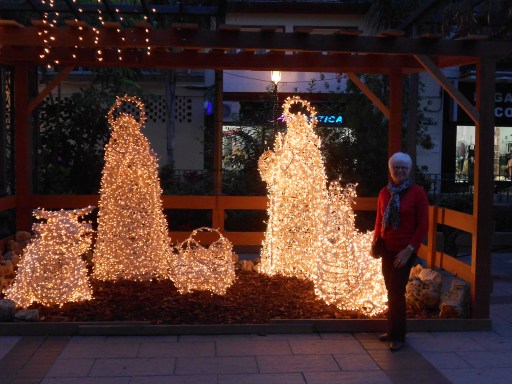
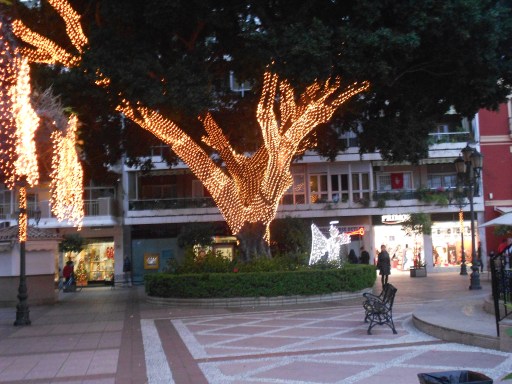
The last trip into Fuengirola was in the evening for a Chinese meal, and to see the Christmas lights.  This is just one square in the town:

Christmas lights, Fuengirola

Christmas lights, Fuengirola

Christmas lights, Fuengirola

We are still adding to a chapter entitled “Nomadic Life & the Trials of Emily”, so next time it could actually get published.  Meanwhile, we hope you have a great Christmas and Festive Season, wherever you are.

Good night, d'Hobby


Until then, it’s Goodnight from us;
and it’s Goodnight from d’Hobby.

Posted in Uncategorized | 2 Comments

December 10, 2012 – Costa Blanca, Spain

A couple of weeks into Spain, and we are still making our way south down the Mediterranean coast.

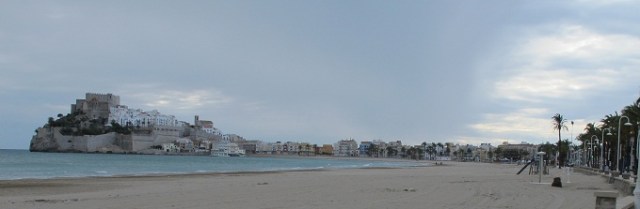
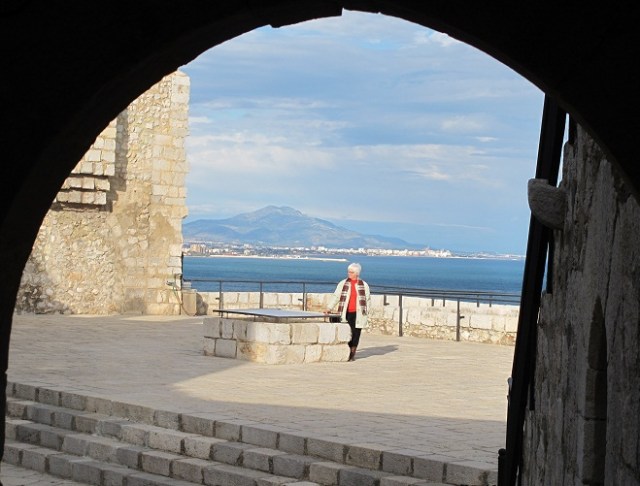
After our first brief stop in Cambrils we carried on to Peniscola, another 100 km down the coast, where we stayed for a few days.  We had visited here many years ago, just for one day, and wanted to explore further.  The main feature of Peniscola is the ancient castle dominating the old town which juts out into the bay.  It was originally built by the Knights Templar in the 13th and 14th centuries as a natural fortress, and further extended by two of the popes who resided here in exile from Rome and Avignon in the 15th century.  It has spectacular views from the battlements and is full of history – the castle and surrounds also featured prominently in the movie “El Cid’ starring Charleton Heston in the 1970s.

Peniscola1 Peniscola2 Peniscola3 Peniscola4

Just as well the castle was open, as the rest of the town was pretty much closed up, and we struggled to find anywhere to get a coffee or lunch during our wanderings.  There was also a bitingly cold wind blowing from the north while we were there, increasing to gale force one night, so d’Hobby was really rocking along with all the other campervans on site.  The campsite was full, which was surprising with little else open in the town.

After that we headed on to Benidorm on the Costa Blanca, our old stamping ground, which was warmer and very much ‘open’.  There were crowds of people on the promenade, strolling or sunning themselves in the cafes and bars, plus others sunbathing on the beach.  Lots of oldies of course, of all nationalities, but a surprising number of younger people too, taking a break from the cold weather in northern Europe and UK.

    Benidorm  hasn’t changed much in the 20 years since we were last here, apart from even more high-rise apartment blocks and hotels blocking out the skyline, and throngs of people round the shopping areas (mainly tat shops & souvenirs, and Chinese bazaars) and old town on the Saturday.
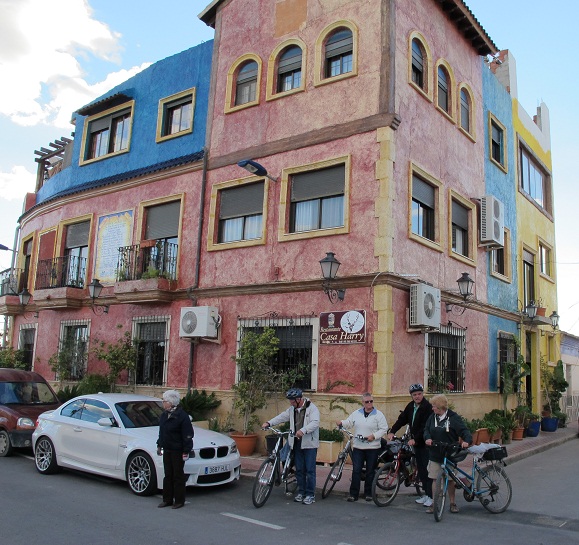
We are currently in a very large camping resort near Elche (Marjal Costa Blanca).  We called in to visit some Australian friends we met near Carcassonne who are wintering over here.  We originally planned to stop for just a couple of nights, but have been here over a week now.  The resort is only a year old and has immaculate facilities, plus a large bar, restaurant, spa, gym, indoor pool, mini-market, tennis courts, petanque pistes, children’s play areas, mini-putt, and a full programme of activities every day.  We have made the most of the gym, pool, and petanque, and it is very nice to have a mini-market on site and a nice bar.  It is also good biking around the area, and we have explored some of the local towns and villages with our Aussie and UK neighbours – stopping for coffee and lunch along the way, of course.

Casa Harry

Marjal is a huge site with lots of long stay visitors from UK and northern Europe, plus a large number of Spanish caravaners who seem to have permanent pitches and arrive every weekend with all their families.  The last weekend has been a 4 day holiday weekend and quite lively all round.

Marjal1 Marjal2

We biked into the nearby town of Catral on Saturday, planning to visit the market there, but there was no market being a public holiday; we had a crap coffee in a Brit bar; then to cap off the morning our Euro debit card was swallowed by a cash machine, which then refused to give us any cash, or to return the card.  Mierda !!  Luckily we still had a Lloyds Stg card to use to get some cash from another bank, but we had to put a stop on the Euro card, then wait until today to visit the first bank and retrieve the card, after queuing for an hour along with 40+ other customers as their computers were down.  (Sorry – not impressed by Spanish banking).

Guard dog Catral

So, we are off for another 280km further south to Almeria tomorrow (Tuesday) on the Costa del Sol, then another 260km to Marbella on Thursday or Friday.  We’re looking forward to parking up there for 6 to 8 weeks over Christmas and January, and we will decide during that time where we go next year – keeping our options open.

BTW – We didn’t get the house and pet sitting assignment we were after in the Algarve in January – but at least we made the last 7 shortlist.  We will certainly keep an eye open for something else for February/March timeframe.

Blogger

Caio for now.

Mike & Jan

Posted in Uncategorized | Leave a comment

Nov 25, 2012 – Provence & NE Spain

Some photos attached from Nimes, Martigues, Fayence and Beziers in south of France.

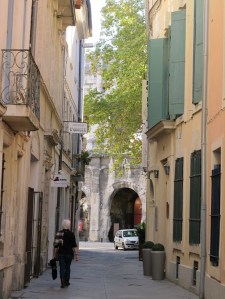
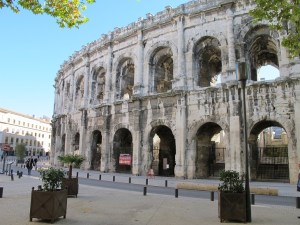
One of the photos in Nimes is the scene from one of our paintings at home by Jeremy Barlow, looking through a narrow street to the Roman Arena, except a large plane tree has grown across the end of the street since then, mostly obscuring the view of the Arena.Nimes3 Nimes2 Nimes1

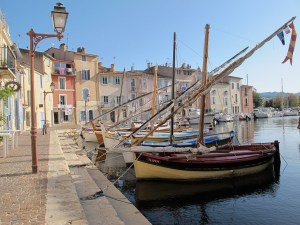
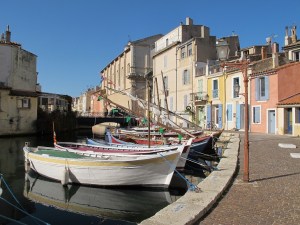
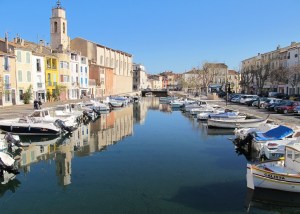
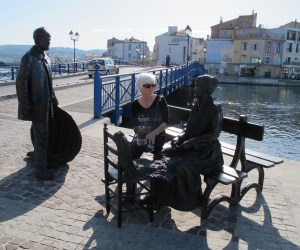
Martigues is a very pretty port town near Marseilles, with the old town centre on an island between two canals, and the photos are of an area here called Petite Venice.  We had a lovely lunch in a bistro by the water, which can be seen on the extreme right of the photo where Jan is in deep discussion with a fisherman and his wife (!) by the bridge.Martigues2 Martigues3 Martigues4 Martigues1

We spent a week with Jan’s brother Mark and his wife Lorna in Fayence, catching up on laundry, home comforts, and cleaning the campervan etc.  We also gave d’Hobby his proper name, and tried out the new awning sides and front we bought in the UK.d'hobby3 d'hobby2 d'hobby1

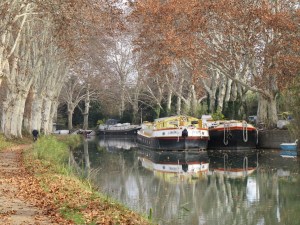
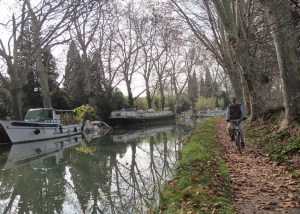
We left Fayence on Thursday and had a long drive to Montpelier, then Bezier where we camped at a small village called Colombiers, just beside the Canal du Midi.  We took a day off on Friday to cycle along the towpath into Beziers town – the towpath was covered in leaves, which successfully hid the tree roots and mud patches until we rode into them, which gave for a very bumpy, slippery ride.  It took about an hour each way with photo stops, but a very enjoyable day out.  Lunch eaten again by the canal at Colombiers Port when we got back (a large base here for canal boat hire, etc.).Canal1 Canal2

We arrived in Spain yesterday, a 6 hour drive down from Beziers, and are now in Cambrils for a couple of nights, just south of Tarragona.
We plan to head on down to Peniscola and Pucol, before getting to Benidorm by end of next week.  The aim is to make Marbella (another 800km) before mid-December, and stay there for 6 weeks or so.  After that, we may have a house sitting assignment in the Algarve in mid-January thru end of February, but won’t find out until next week.

We had our first brush with Spanish crime on the first day here!
Some jerk tried the trick of getting us to pull over on the AP-7/E-15 Auto-Pista not long after Tarragona, 2km before Exit 37 at Cambrils – flashing his lights and waving at our rear end as if there was a problem.  He then pulled in front of us to try and get us to pull up, but we swerved around him and left him in our dust, out of his car on the hard shoulder, looking surprised.  We came off at Exit 37 anyway, and never saw him again.
I had only checked all the tyres, bike rack, etc. after our lunch stop, so knew there was nothing wrong.  It was all too quick to take his number, which was a pity, and he didn’t try and catch us up again.

The only times we’ve had any trouble in all our travels around the world have been in Spain:
• Attempted mugging in Barcelona in 1998;
• Jan’s handbag swiped at Alicante airport 1999;
• Attempted highway robbery yesterday.
Why are the Spanish so lawless ?   They’re supposed to be a civilised nation, but it’s like the wild west in places.

Anyway, it’s nice to stop shivering again, and back to 17oC & 18oC, and sunny days.  Hope it holds out, or even gets better as we go further south.

Salud !!

Posted in Uncategorized | Leave a comment

Nov 10, 2102 – Chartes, Loire Valley, Lyon, Rhone Valley

A quick update on a wet ‘day off’ in Lyon.
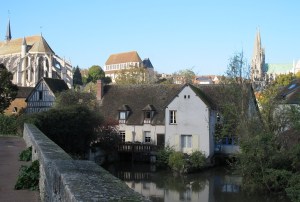
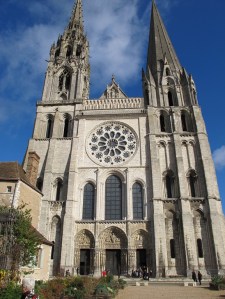
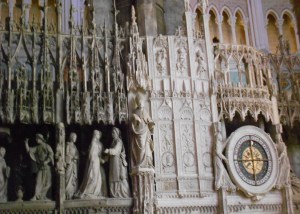
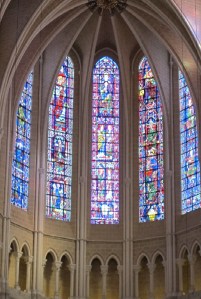
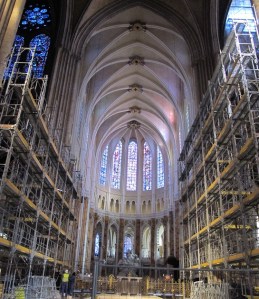
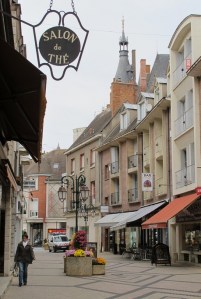
After leaving Normandy we spent a couple of nights in Chartres and visited the old town and the cathedral – reputed to be the greatest Gothic cathedral in Europe.  Not sure if that refers to size or decoration, but it was originally built in Romanesque style in 1020-1100, destroyed by fire in 1194, then rebuilt in 25 just years in the present Gothic style.  It is currently undergoing cleaning and restoration, and the difference between the cleaned and uncleaned areas are stunning.  (Some of the differences are shown in our photos of both interior and exterior).


The stained glass windows are also pretty special, having survived some eight hundred years so far, with a predominance of reds and blues in the main ones, especially the large rose windows in the north and south transepts, and above the west door.
All the windows were removed piece by piece and stored away for safety in both world wars, then painstakingly put back in when peace was restored.

We then drove south around Orleans (we’d been there before) to a campsite on the south side of the river Loire at Gien. We wandered around Gien itself, but the church and chateau were both closed, the latter for restoration.

The big problem we are having at this time of year is whether campsites are still open.  Our next planned stop at Nevers on the Loire was a case in point.  The guide said open all year, but the site was very closed when we arrived, so we carried on another 200 km to Lyon.  Good move actually as it is quite a lot warmer now as we’ve come further south, with 18oC and 19oC forecast  this coming week here, and in Arles where we are headed next.

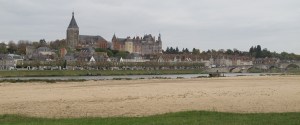
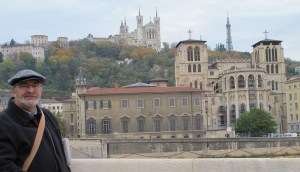
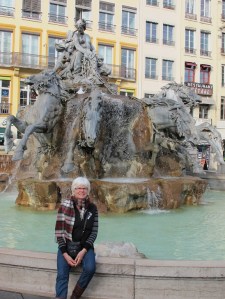
Lyon is the 2nd largest city in France, very much like a Paris in the south except for all the terracotta tile roofs, and we spent the whole day yesterday exploring on foot, after taking the bus and metro into town.  The Basilica of Notre Dame on the hill was (also) undergoing restoration, but still open, as was the Cathedral of St Jean down by the river.  Both these can be seen in photo #1.

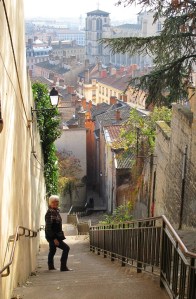
We caught the funicular up to the Basilica, then walked back down through the gardens and many steps to the Vieux Ville (old town) by the river, then walked through the main city centre on the “Presqu’ile” ( = ‘nearly island’), i.e. a peninsula between the 2 rivers Saone and Rhone.  The last photo shows a huge 19th century fountain in the Place de Terreaux by Bertholdi – the sculptor of the Statue of Liberty gifted to New York.

That’s it for now.  Nice to be warm again, even if it is wet, and we’re looking forward to better weather as we move further south – Provence next for a couple of weeks, then into Spain.

Posted in Uncategorized | Leave a comment

Nov 4, 2012 – London, New Forest, Normandy

We are on the move again, now parked in a camp site in Merville-Franceville Plage, right next to one of the historic invasion beaches in Normandy – “Sword” beach stretches from Cabourg in the east, through Merville and Ouistreham in the west, where one of the main armies of British, Canadian and French troops landed.  Merville is also the site of a large German gun battery that the British paratroops had to neutralise as it covered the landing beaches, and they also had to capture ‘Pegasus bridge’ between Merville and Ouistreham to secure the west flank of the invasion.  There are big memorials to these actions in the area, and more being built in the run-up to the 70th anniversary of the invasion in 2014.   We walked along the beach and around the dunes and town this morning for 1½ hours, and although the sun was shining (mostly) there was a freezing westerly wind blowing.  Needless to say we stopped for the obligatory café on returning to the seafront to warm up again, before heading back to the campsite.

Last week saw Mike’s doctor and diabetes clinic appointments completed and all is well.  He has lost 5 kg in the past 3 months, just from our more active lifestyle, and all the test results are good, so we are now all up to date with prescriptions for the next 3 months.  The UK doctors won’t prescribe more than 3 months, so we will have to sort out a further 3 months in Spain – we’re told most of these meds are available across the counter there anyway.

Our last few nights in UK were spent at Brockenhurst in the New Forest as we had to move on from the Surrey site – we are only allowed a maximum of 21 nights on individual Caravan Club sites around London, and we had reached our limit.  Our departure was a bit hurried as the wardens had said they would sort out us staying for the extra 2 nights, but when it came to the crunch, it became impossible “according to the Club rules”.  However, the New Forest was a pleasant interlude, with walks in the forest amongst the grazing ponies, and visiting Lymington again on the coast.  Many areas of the forest area were flooded from all the recent rain, but we managed to jump the puddles without getting too muddy when we walked the 2 miles into Brockenhurst.   Lots of ponies were also in the town centre, along with a family of donkeys, all trying to cadge food off the residents and visitors.  Although it is ‘verboten’ to feed them, the ponies obviously couldn’t read the notices.

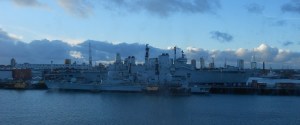
Our last night was spent on the wharf at the ferry terminal in Portsmouth – wet, cold and miserable, but we spent the evening in the café at the terminal where it was warm and bright, and only went back to the camper at 10.00pm to sleep.  Our reporting time for the ferry to Normandy was 7.15am on Saturday, so it was much more convenient to camp on the wharf than at a campsite an hour away.  It was interesting to see so many the British naval ships in Portsmouth dockyards as we sailed out on the ferry – everything from a jump-jet carrier, with attendant frigates and destroyers, to a visiting American submarine and Egyptian (or Saudi Arabian ?) destroyer side by side.

So here we are again, back in France, and we will head south and east from here down to Provence for a week or so before continuing on to Malaga in south of Spain.   Broad plan of attack is to drive down through Chartres, Orleans, Nevers and Lyon, then down the Rhône Valley to Provence.  This should take about 2 weeks as we are not in a rush, but still conscious of the weather getting colder even as we move south.

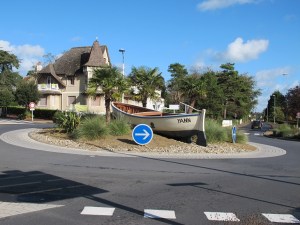
One photo included showing one of the decorated roundabouts we have seen so many of in northern France – both in Brittany and Normandy.  Beautifully kitted out with nautical or farming scenes, and one even had an old wine press in the middle with decorated barrels around it.

Cheers.

Posted in Uncategorized | Leave a comment

Oct 27, 2012 – Surrey, Kent, London

Not a lot to report at this time.  We are kinda stuck near London, at Alderstead Heath, near Redhill in Surrey, waiting to complete doctor’s and clinic appointments etc.  Once these are completed, and we’ve got prescriptions sorted for the next 6 months, we can be on our way again.

We did manage to get the original appointments brought forward by 2 weeks – now 31st October.  So we’ve got a channel ferry booked for the following weekend from Portsmouth to Caen in Normandy on 3rd November.  We can head south from there to the Mediterranean again, and the south of Spain for winter.  We look at the weather reports with some envy, with typically 20+oC in the south of France and Spain still, while we have been hovering around 14oC, and down to 8oC this weekend with a frigid northerly blowing.

Why the rush ?  Well it is definitely getting colder and more miserable here.  We have been in the UK for nearly a month and only enjoyed 2 sunny days in that time.  We are currently into our 12th day in a row of general cloudy skies, with showers and cold wind, and the 7th consecutive day on the campsite of fog and drizzle.  The last fine day was Sunday 15th October, so it is getting very damp and depressing.  See photo of “d’Hobby in the fog” for a view of how things look around here.

We have been filling in time with some touristy things where possible, and as transport allows:
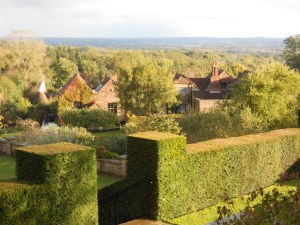
• A visit to Chartwell (Churchill’s home in Kent) – a National Trust property and beautifully preserved.  See photo of autumn colours starting in a view of Kent Weald from Chartwell;

• the Victoria & Albert Museum in London – superb collections of sculptures and art – especially exhibitions of Constable & Turner landscapes;
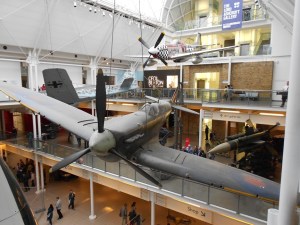
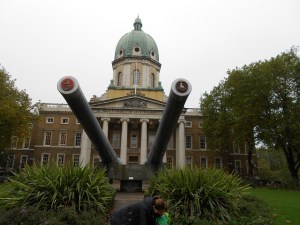
• the Imperial War Museum in London (see IWM photos), undergoing a make-over but impressive collections, plus a bonus exhibition of Cecil Beaton’s photos from WWII at home and abroad – Europe, plus near and far east;


• a day out to Tonbridge in Kent for cousin Pam’s 70th birthday lunch;
• a day out by train to Colchester and Lavenham in Suffolk, for lunch with cousin Heather & family;
• a day at the motorhome show in Birmingham by train.

The museums were both very interesting and well presented (and free admission), and the motorhome show was absolutely enormous, covering 14 halls of the NEC, with every conceivable model of motorhome and caravan on display, plus a huge selection of accessories with everything from awnings to tea cups and trailers, and all the knick-knacks you never knew you needed!  We bought a collapsible clothes line to take away with us, and details of some sides and front panels for our awning which we have now ordered on-line.  We didn’t look too hard at the lovely new motorhomes as we would get a bit jealous – we have to live with d’Hobby as the best we are going to get for our money.  We could have bought an immaculate, up-to-date with all the bells & whistles model if we had doubled our expenditure, but then had no cash to live on!

On the two occasions of our days out by train we’ve had to endure the rush hours to get across London to the relevant stations to catch our trains.  It’s a nightmare, especially on wet days, with everyone scurrying in all directions, in the tube and the stations, all crammed in, with damp clothes and fuggy atmosphere.  Who could endure that day after day?  Certainly not our cup of tea anymore.

Cheers!

Posted in Uncategorized | Leave a comment

Oct 6, 2012 – Brittany, Normandy, Devon UK

Update from Devon – 6th October 2012
Greetings from the ‘English Riviera’ of Torbay.  If this name conjures up visions of balmy days with sunny skies, warm sea breezes, long sandy beaches, and lazy hours in a deckchair, then think again!  Blustery, cold winds, showers and occasional fine periods are more the order of the day, with us wrapped up in coats, hats and scarves, and bustling around the streets of Devon towns avoiding the rain.
We finally gave up on the Brittany Ferries from France, having spent three nights at St Pol de Leon, near Roscoff, waiting for news on the resumption of sailing after they cancelled everything following crew wildcat strikes.

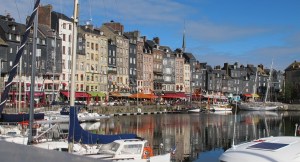
There was no end in sight by Wednesday last week, so we drove up the coast to Le Havre in Normandy, staying a couple of nights in Honfleur, which has to be the prettiest town in northern France, with its cafés and shops in multi-coloured tall buildings lining the inner port quays.


We got a ferry from Le Havre to Portsmouth on Friday afternoon at 5.00pm, arriving in Portsmouth at 10.00pm, and our campsite at 11.00pm.  Saturday was spent shopping, stocking up on English things we had run out of like Marmite, almond butter, marmalade, etc. then we drove down to Devon on Sunday.  We are currently staying at a nice campsite halfway between Brixham and Dartmouth.
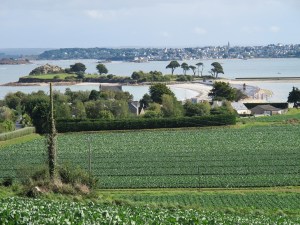
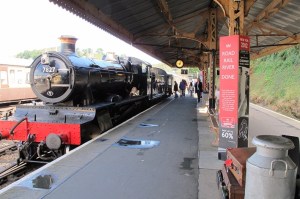
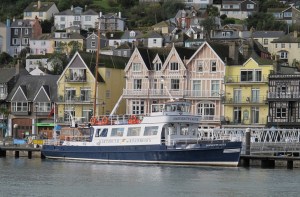
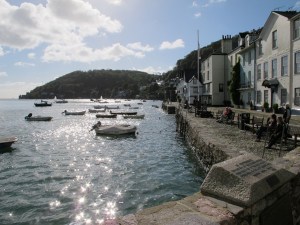
Nearby Paignton is Mike’s birthplace, so we have booked in here for a week, exploring the Torbay area using public transport.  Our (free) bus passes from London are also accepted here, so Monday was spent in Dartmouth, Tuesday in Torquay, and on Wednesday a cruise up the River Dart to Totnes, then a bus to Paignton, and a steam train back to Dartmouth.  We had to pay separately for the river cruise and the steam train, but the rest was ‘gratis’ – excellent.


The river cruise was very interesting and picturesque, with a witty commentary from the Captain describing the shipping, villages and the rich and famous at large country house estates (like Agatha Christie’s home) and even a vineyard.  Of the wild-life around, we saw a family of seals basking on a pontoon in the river, plus dozens of pheasants in the fields, snapping up the bugs after the harvest.   (We have enjoyed some genuine Cornish pasties for lunch this week, and Jan is now looking out for pheasant pie at our next pub lunch).  We also noticed the countryside is extra green after the south of France, and the contrast with the red earth of Devon in the newly ploughed fields can be quite startling.

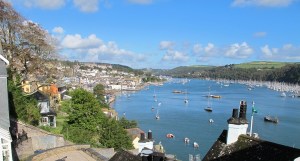
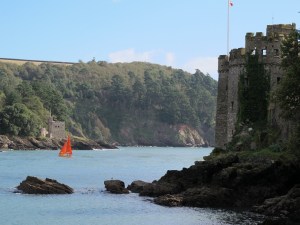
The one really fine day we had on Thursday we walked to Dartmouth Castle at the mouth of the river – a very pleasant wander along cobbled streets, then tree lined lanes with water views.  We enjoyed a coffee in the sunshine at the castle café before going back to Dartmouth by ferryboat, and a very tasty fish & chip lunch.


We will be heading back to London next week (via Bristol and Bath) where we will be staying at a campsite near Redhill in Surrey for 3 weeks while we sort out appointments etc., then a further 3 weeks at a site near Greenwich.  We may even fit in a theatre visit or two if we find something of interest, and quite possibly some crispy duck again at some stage!.  One confirmed date is to visit the motorhome show in Birmingham (by train) on 18th October.

The plan after that in mid-November is to head south to Portugal and Spain to hide out the winter.  More news on that nearer the time, when we get things organised.
Meanwhile, it would be nice to receive some reciprocal updates from folks at home with their activities and trip reports perhaps?

Footnote – we’ve decided our mission in life whilst here in Europe is to ruthlessly seek out the best chocolate eclairs in the market.  We have already started the process through the south of France, Bordeaux and Brittany, and the best so far? – a small patisserie in Quiberon.


Posted in Uncategorized | Leave a comment