
March 14, 2013 – A round up of 10 weeks on the Costa del Sol, and through the hinterland of Spain
Note – hover the mouse/cursor on a picture for a description, or click on the image for an enlargement.
We apologise in advance to our friends for naming them in the photos – it’s so we don’t forget who they are !
We arrived in Marbella on 15th December, and stayed on the Camping Marbella Playa site for 10 weeks, until end of February. It was probably one of the best decisions we’ve made so far, as the weather was very kind (only 2 rainy days in 10 weeks), the temperatures were mild, and best of all we made friends with some lovely people on site who we hope to catch up with again soon in the UK.
Camping Marbella Playa: The campsite is between the beach and the N340 highway, which would have to be one of the busiest roads in Spain, and is roughly half way between Fuengirola and Marbella. Not many bike tracks around this area, although we biked a few times to the local village of Elviria for shopping, but the bus service is good, running on both directions on the N340 every half hour, for €1.60 – €1.80 either way. There were lots of Germans, Dutch and Scandinavians wintering on site, plus quite few Spanish with semi-permanent awnings etc. over their caravans. The remainder are a scattering of English, Scottish, Welsh and Irish (firmly identifying themselves separately), plus us as the sole reps from the Antipodes. The only other Kiwis we saw the whole time were two couples who came through at different times in late February on their way to Portugal and Morocco.

d’Hobby on site at Marbella Playa
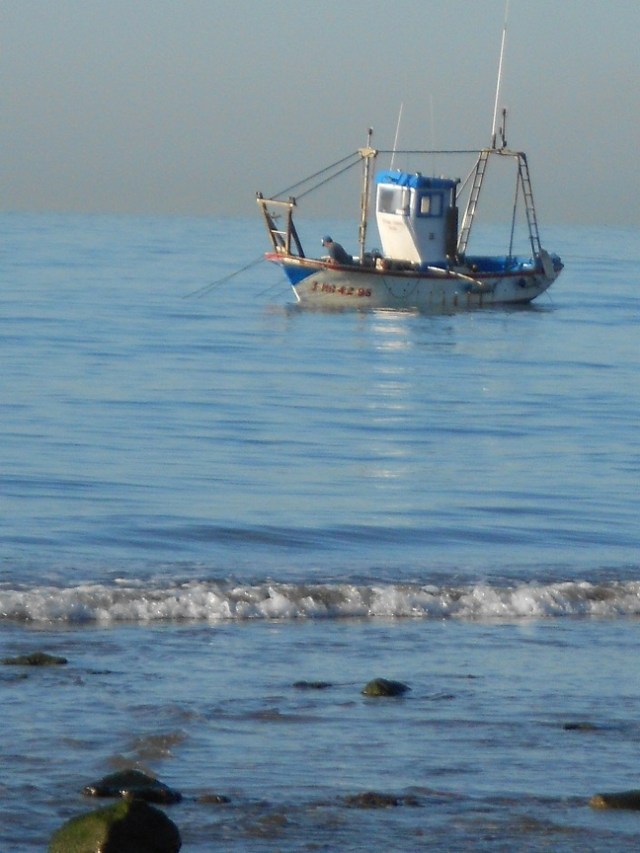
Fishing boat off Marbella Playa
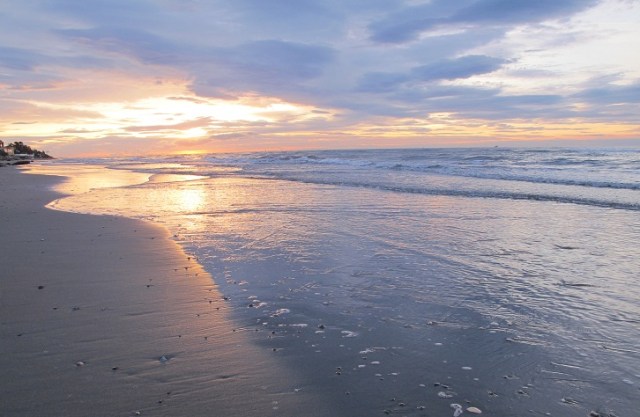
Dawn on beach Marbella Playa

Marbella Playa sunset
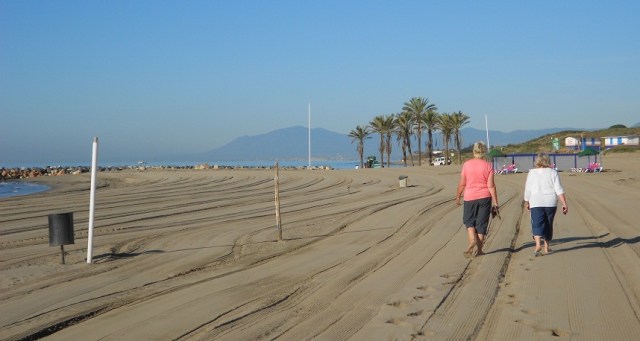
Walking the beach – Cabapino
As already mentioned in an earlier chapter we spent three nights at Christmas at a hotel in La Cala de Mijas (on the coast) with some of our English friends from the camp-site, and had a great time eating drinking and walking the locality. New Year was spent on the camp-site, celebrated with friends, a large paella and lots of wine.
Mijas: On the day we left La Cala after Christmas our friends took us on a visit to Mijas (Meehass) itself, which is a small Pueblo Blanco (white town) in the hills behind Fuengirola. Although very touristy, Mijas is one of the prettiest towns on the Costa, with fantastic views out to the coast, and is famous for its donkeys known as ‘Mijas Taxis’.
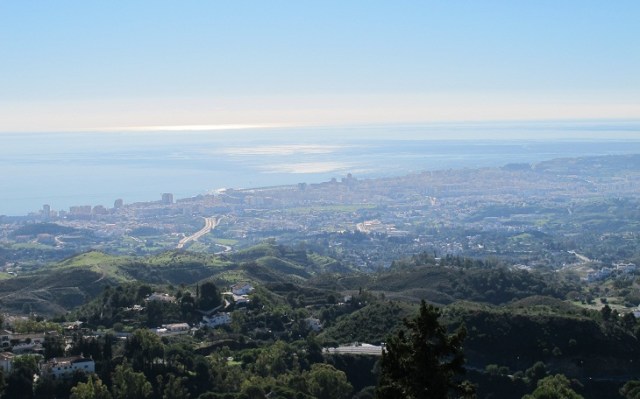
View towards Fuengirola from Mijas

Mijas donkey (!)
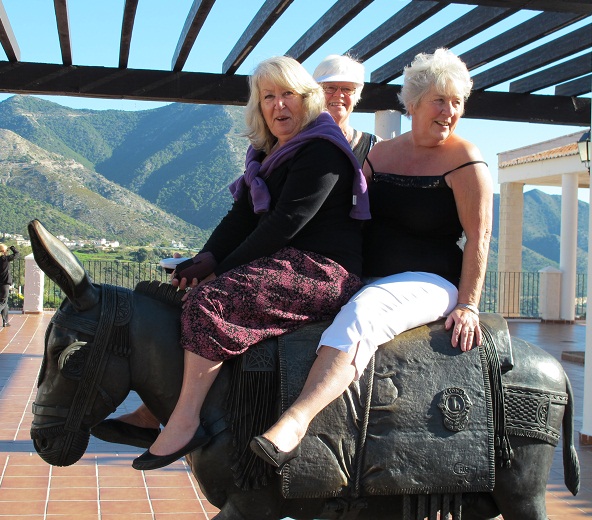
No more room ! Jan, Lorraine & Doreen
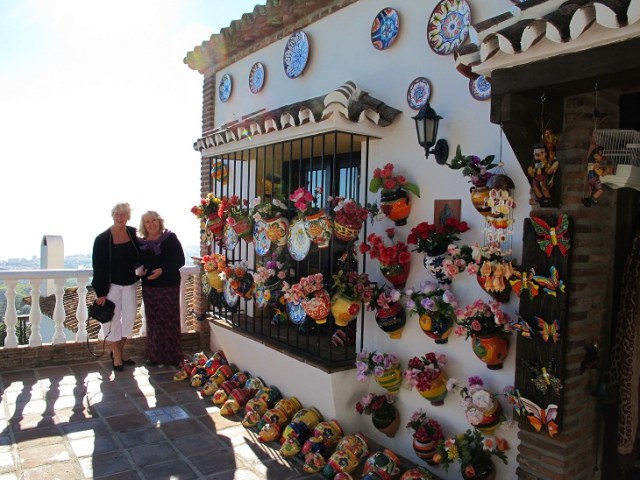
Mijas – Lorraine & Doreen (Dolly)
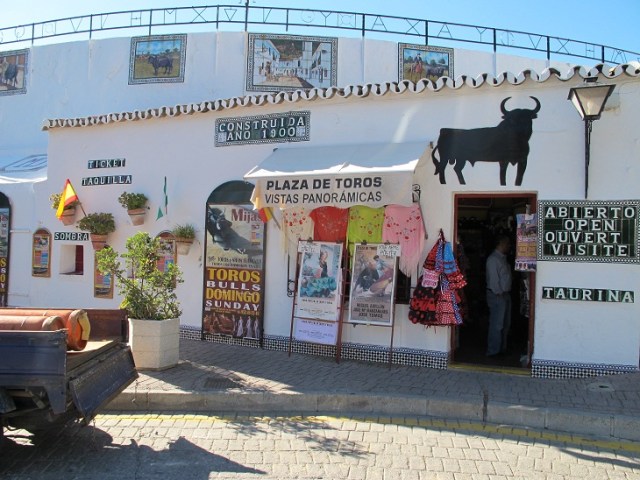
Mijas bullring
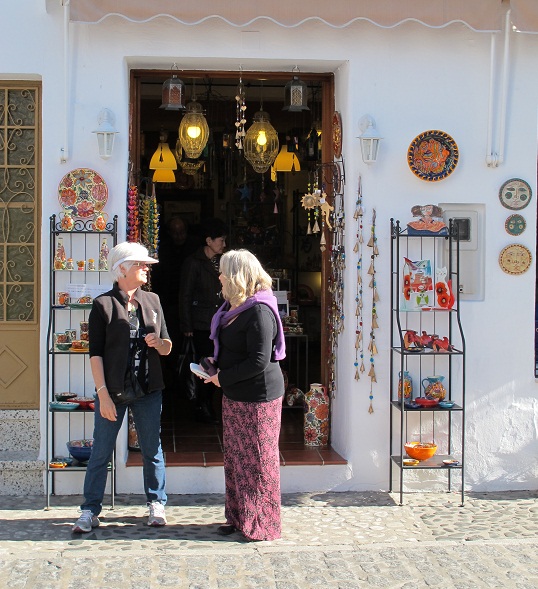
Mijas – Jan & Lorraine
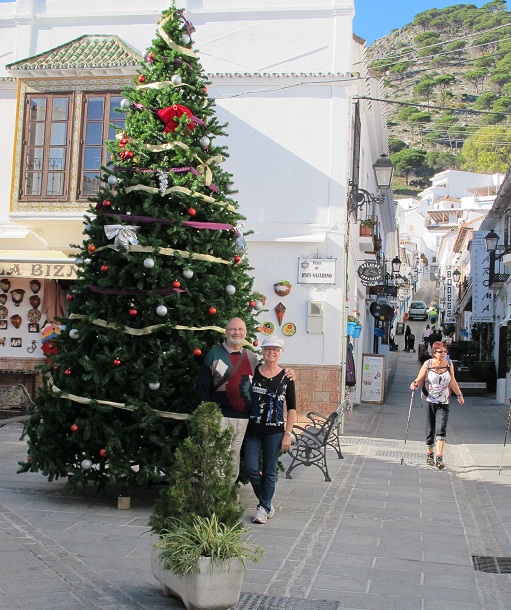
Mijas – still Christmas !
Estepona: is a coastal resort further south/west from Marbella, which has a very nice long modern promenade, but has managed to preserve its old town just behind the waterfront.
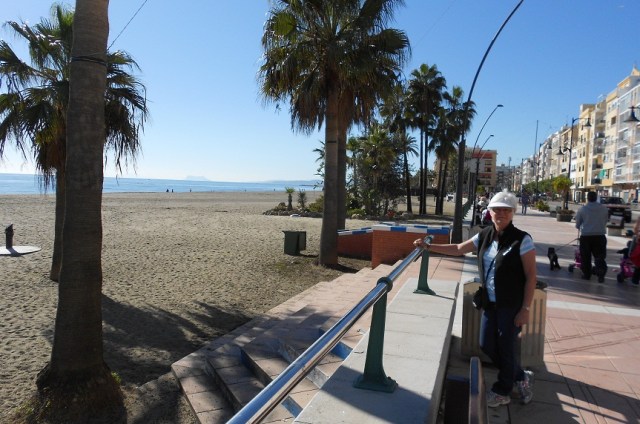
Estepona Promenade, with the Rock of Gibraltar in the distance
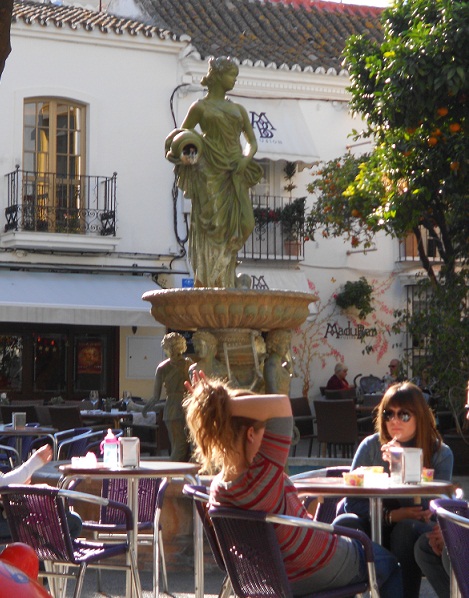
Estepona Old Town
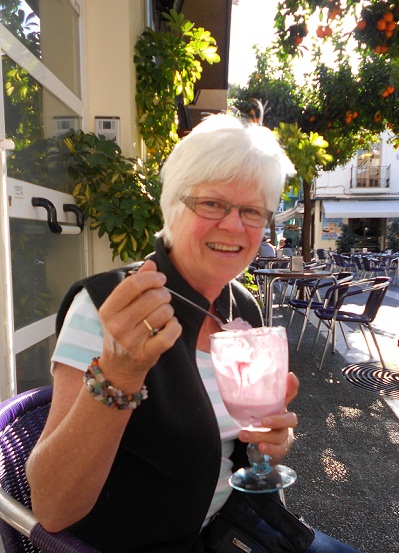
Yoghurt & berry sundae – healthy!
Malaga: We took a bus to Fuengirola, then a train to Malaga, for a day out with friends from the campsite. A tour of the city on an open top double-decker bus was followed by a stroll through the old town and around the Cathedral, and lunch at a bistro/bar. Malaga is a very tidy, compact city, and great strides are being made for a new Metro system which should reduce congestion considerably.
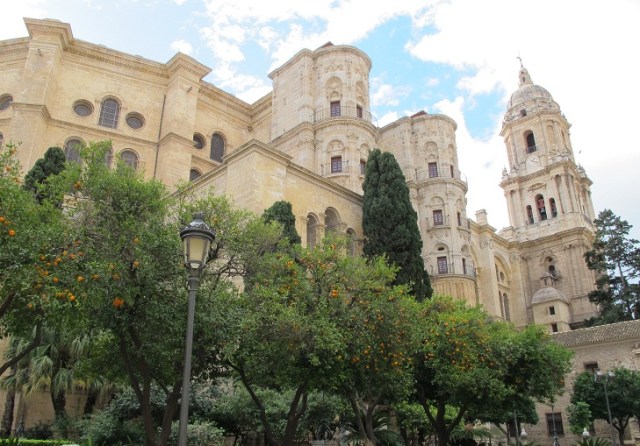
Malaga’s mainly baroque Cathedral
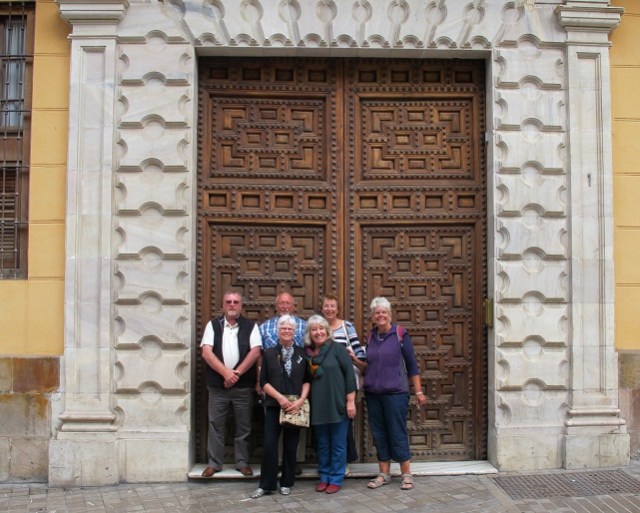
Malaga – day trippers looking for a bit of culture!
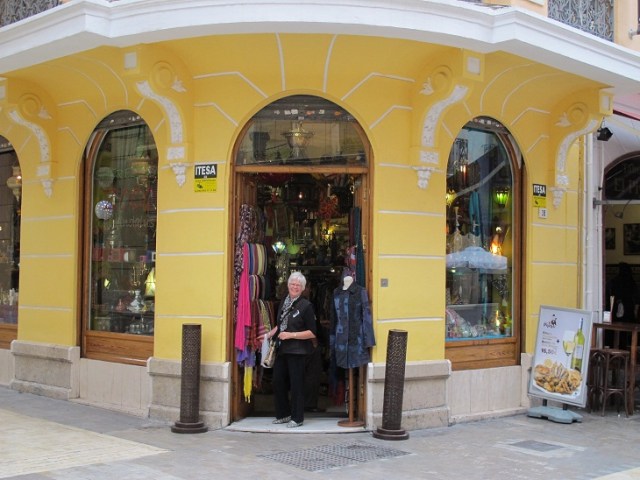
Malaga amazing gift shop
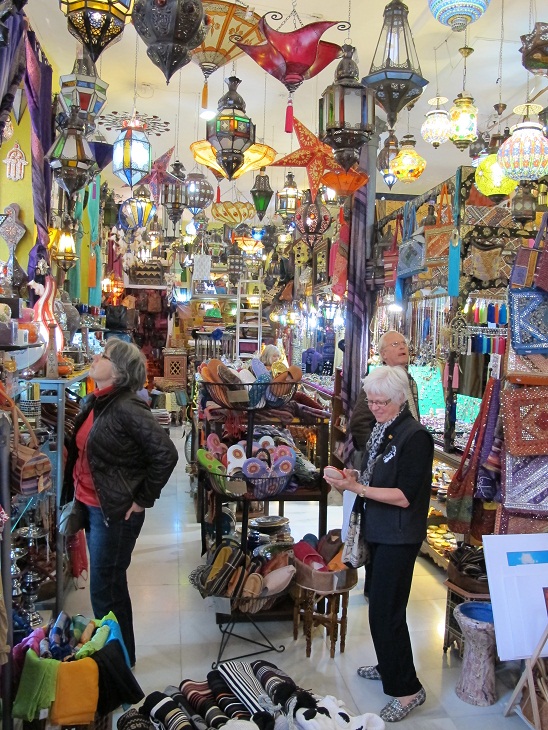
Malaga – inside the amazing gift shop
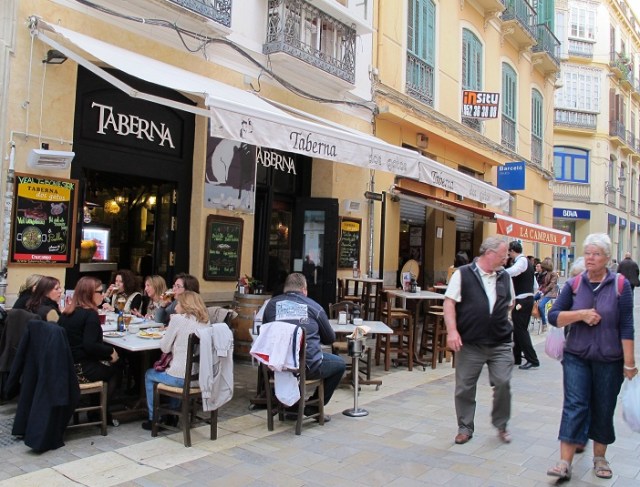
Malaga – looking for food – BJ and Nick
Ronda: is a small ancient city way up in the mountains behind Marbella. We took a day trip by coach to visit here, which took nearly 2 hours to get there winding up through the mountains. Ronda sits on an outcrop of rock in the centre of a basin surrounded by higher mountains. A gorge cuts through the centre of the city, separating the old town (built by the Moors in the 8th to 15th centuries) from the newer part which dates from the 15th century onwards. A spectacular viaduct/road bridge built in the 18th century spans the gorge, which is over 100m (330 ft) deep, and the centre part of the structure served as a prison in bygone days. Ronda is also the birthplace of bullfighting in Spain, and still has the oldest and one of the biggest bullrings in the country.
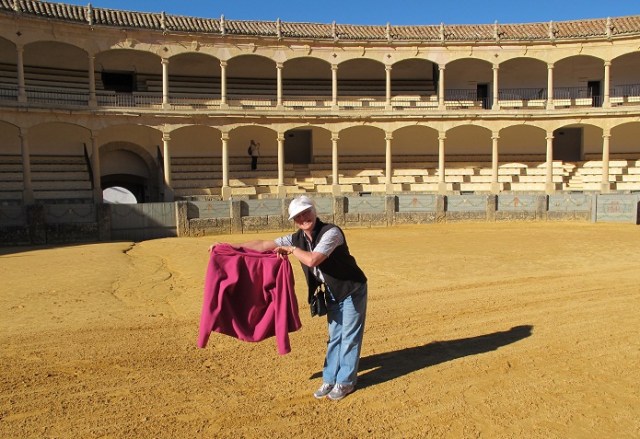
Ronda – no charge!
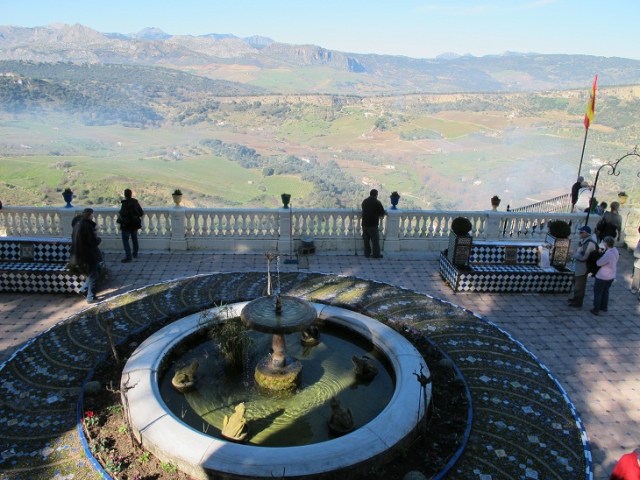
Ronda – view from Casa Don Bosco terrace
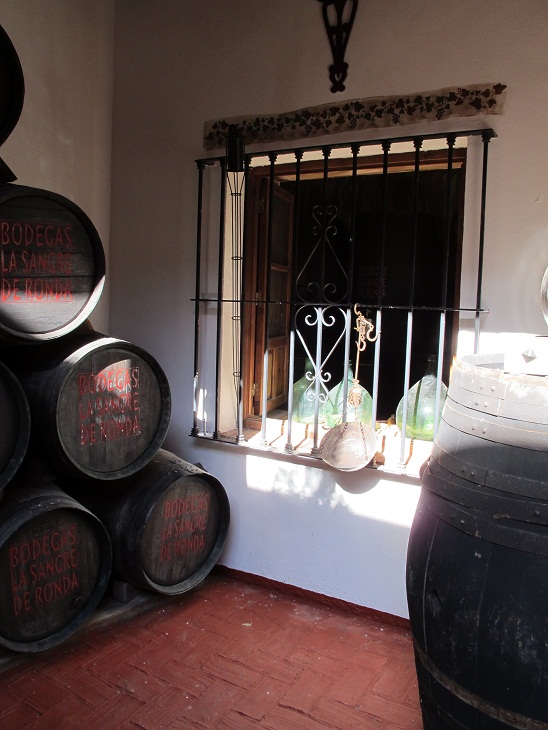
Ronda – Bodega we went to for wine tasting
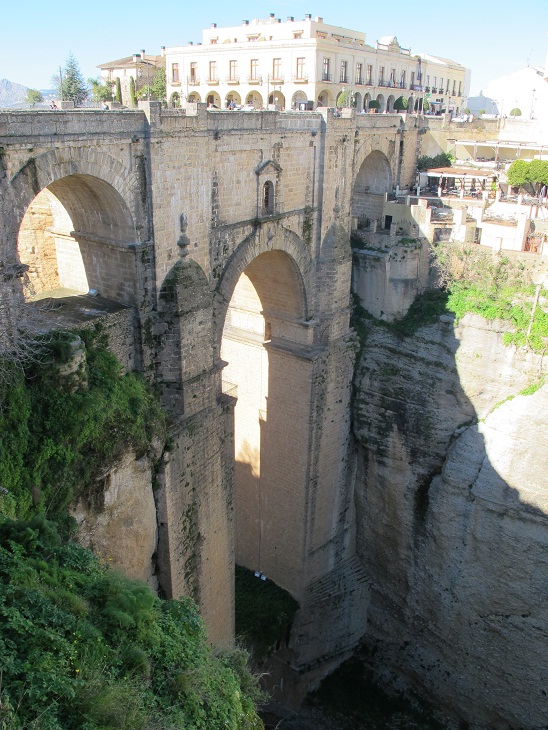
Ronda – the “New Bridge” 17th century – our lunch restaurant on the right
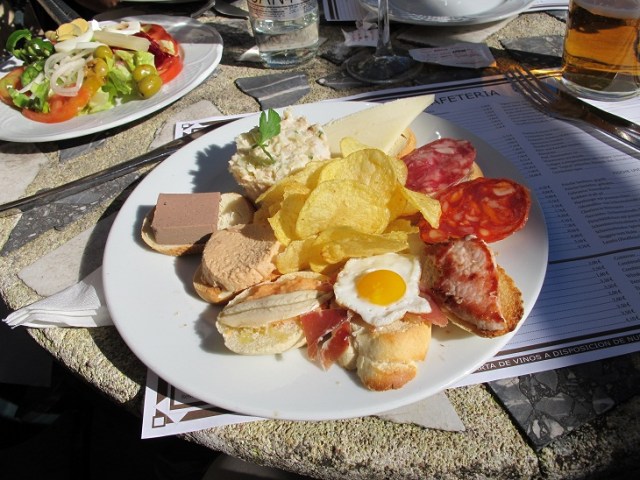
Ronda – mixed tapas for lunch
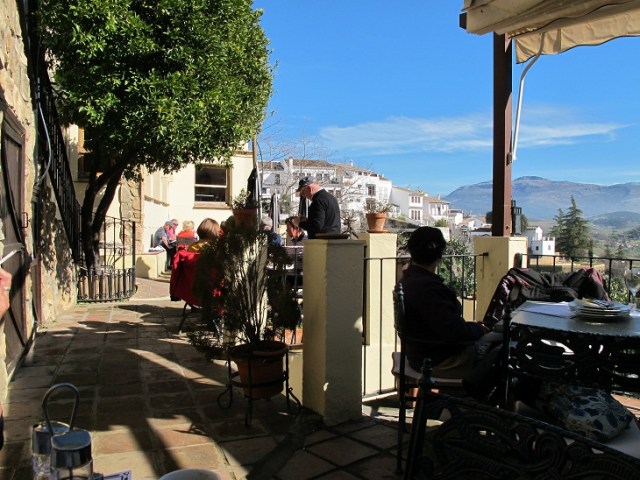
Ronda – terrace restaurant
We had a lovely lunch in the sunshine with spectacular views, beside the bridge at a bistro which is built on terraces for 3 levels down the side of the gorge.
Marbella: is the next biggest town on the Costa del Sol after Malaga, and we visited here a few times as it is not only handy but good shopping and very picturesque to go with it. The Municipal Market is a favourite with us, and is open every day for fresh meat, fish, vegetables and deli stuff. We love wandering the old town of Marbella, especially the lanes around the Plaza de los Naranjas (Oranges), plus a park off the promenade contains a permanent exhibition of statues by Salvador Dali is always worth a visit.
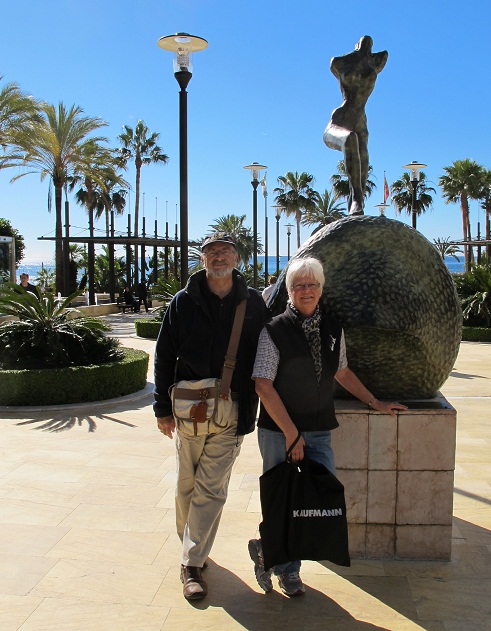
Marbella – Salvador Dali park
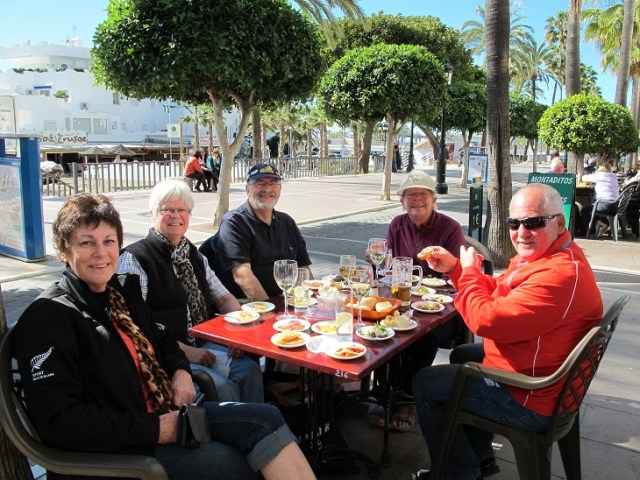
Marbella promenade – tapas lunch with BJ and fellow Kiwis Linda, Milton
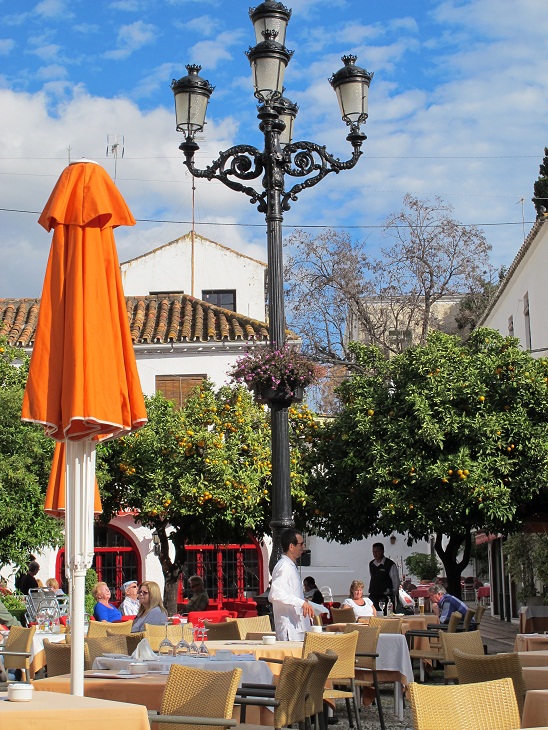
Marbella, Plaza de los Naranjas
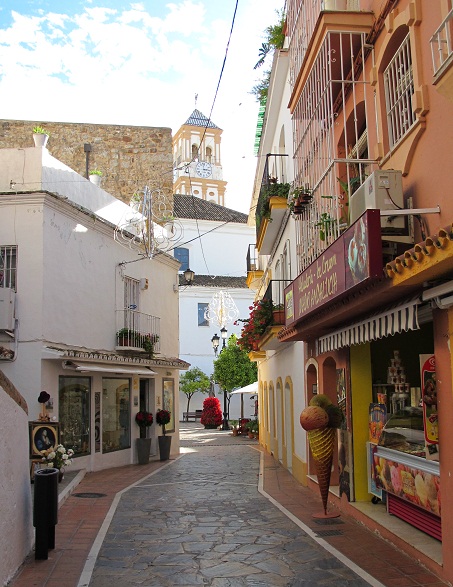
Marbella old town
Puerto Banús: is the exclusive resort and marina/port of Marbella. It was designed, developed and built by the architect José Banús, and the whole area is named after him. All the boutiques, cafés, restaurants and apartments surrounding the marina are very upmarket and designed as one complex. All the brand names are here of course – Gucci, Prada, etc., and lined up along the sea wall are large numbers of Ferraris, Porsches, Range Rovers, Aston Martins and Bentleys. And the boats have to be seen to be believed. The largest super-yachts are at the west end (of course) where the most exclusive boutiques and restaurants are, and get progressively smaller as you move east along the marina.
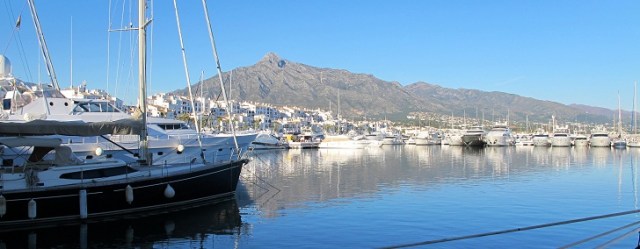
Puerto Banus marina
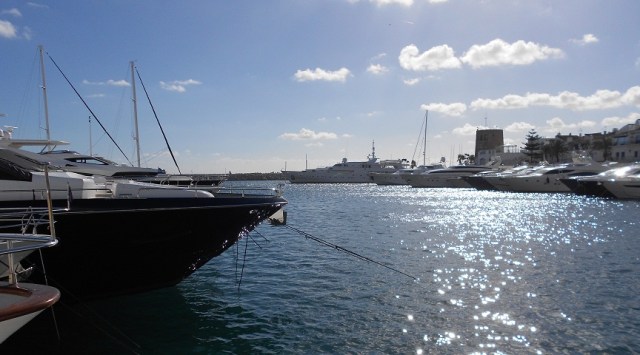
Puerto Banus marina – west end
Gibraltar: We enjoyed a day trip here with friends in their car. Pure indulgence of course, to sample the English pub, café and shopping atmosphere of Gibraltar for a while. We didn’t take many photos as we had been here before in 1991, and nothing much has changed except for being busier, and more spread out around the fringes.
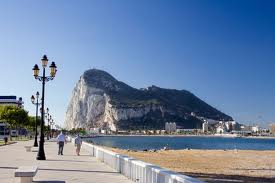
Gibraltar from the causeway

Gibraltar – entrance to the casements area
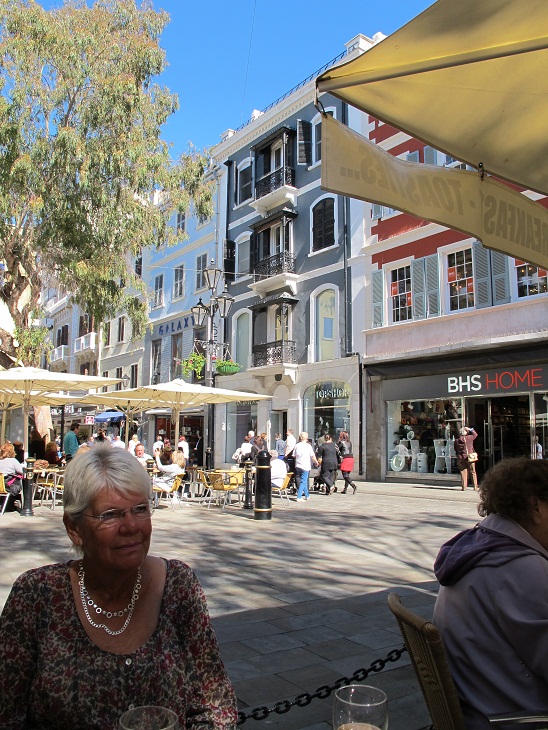
Gibraltar lunch – BJ – (Big Jan)
Toledo: We left Marbella Playa on Friday 1st March and headed up through the centre of Spain, via Malaga and Cordoba, and around Madrid, to Toledo in La Mancha. We didn’t stop in Cordoba as we had visited there before, and had an overnight stop in a small village (Santa Elena) in a National Park along the E05 highway. It was very cold and frosty in the mountains, but it stayed dry for us the whole way north. Along the way we circled around Madrid on the motorways, then travelled through La Mancha and saw some of the famous castles and windmills which feature in Cervantes’ adventures of ‘Don Quixote’. Also lots of agriculture with huge areas of olive trees, almond trees in blossom, and hundreds of kms of grapevines (La Mancha claims to have the largest area of planted grapevines in the world, and we can quite believe it).
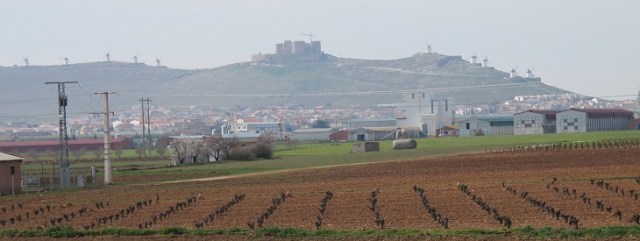
Consuegra, La Mancha – castles, windmills & grapevines
Toledo is the city from which Don Quixote and Sancho Panza set out on their adventures. Although we had visited the city briefly some years ago, we spent two nights here and think we did it justice this time around. The Alcazar is a magnificent building, mostly destroyed in the Civil War siege of Toledo in the 1930s, and rebuilt on the original site. It now houses the Spanish Military Museum, showing the history of the military and the monarchy of Spain. We spent most time just wandering the streets of the medieval city, enjoying the atmosphere and the cafes.
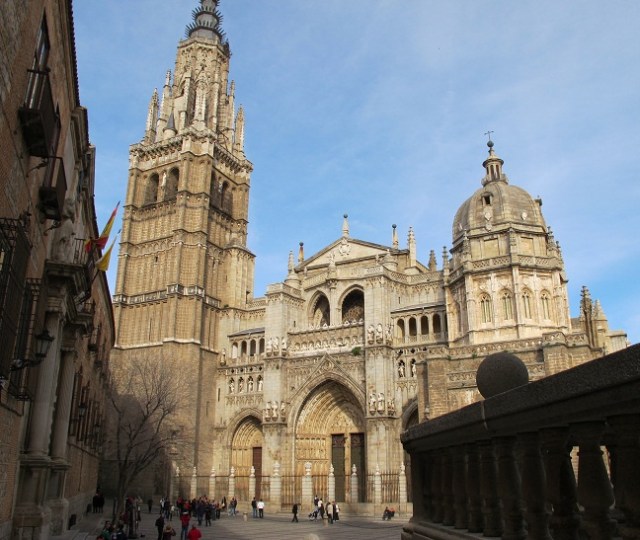
Toledo Cathedral
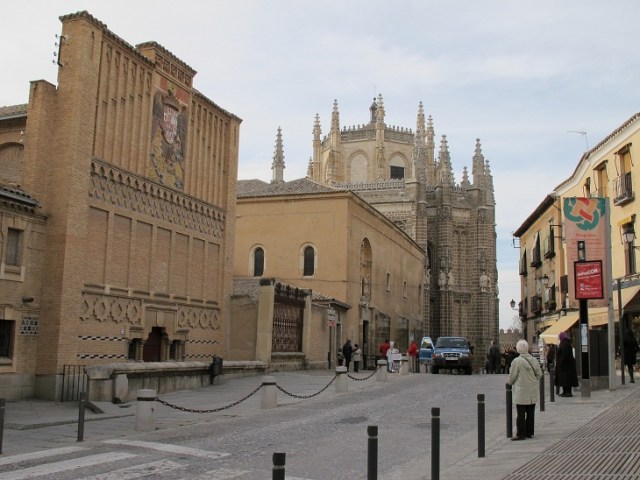
Toledo – School of Fine Arts & Monastery de San Juan
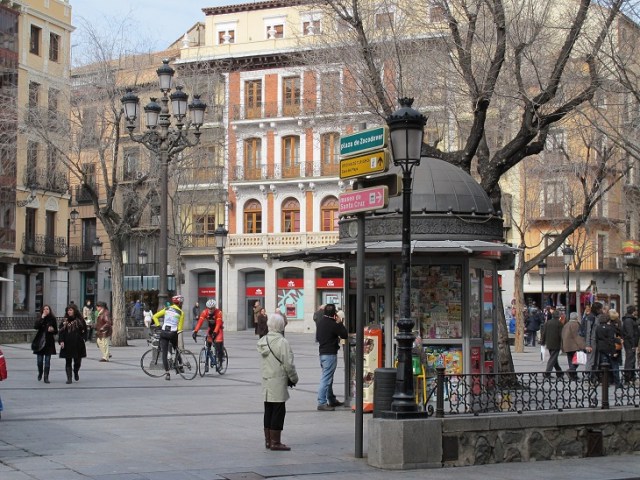
Toledo – Plaza de Zocodover
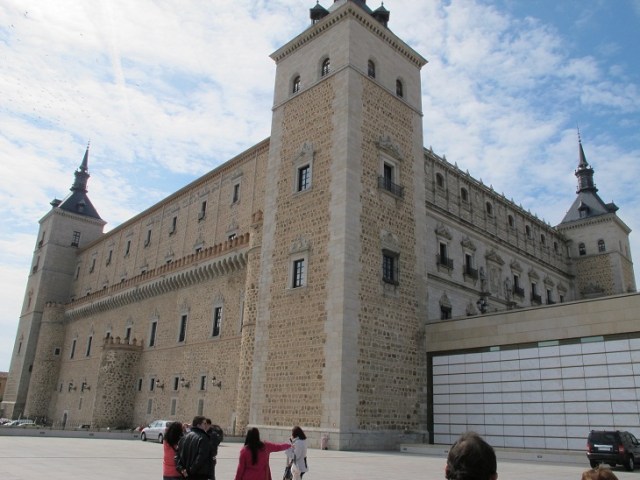
Toledo – the Alcazar
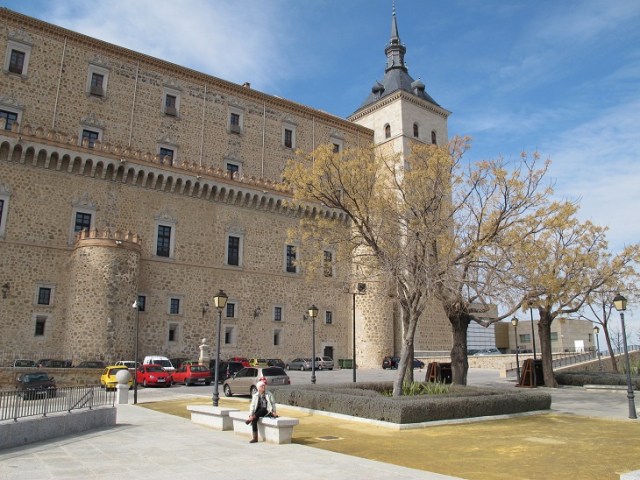
Toledo – Alcazar gardens
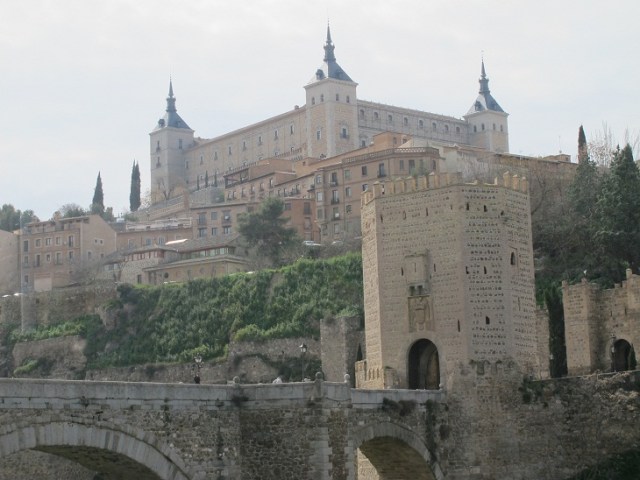
Toledo – Alcazar & Roman Bridge
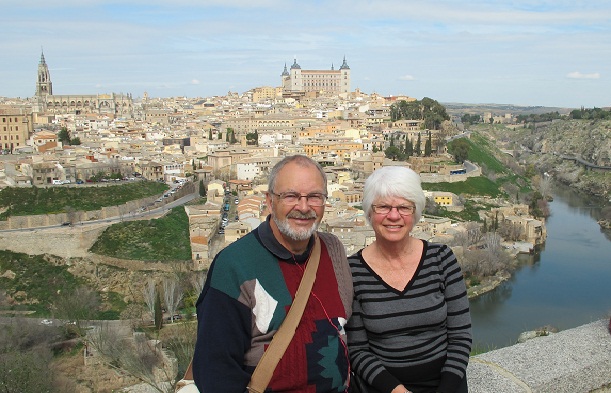
Toledo – two more ancient monuments
The campsite in Toledo (Camping El Greco) was just down the river from the city, with heated toilet blocks etc., and a bus service from the gate right into the centre of the old town. Very expensive though, at €30 per night.
Burgos: is the largest city in the north of Spain, at the cross-roads between the ancient east to west pilgrimage route to Santiago de Compostela, and the main trade route from France and the north coast, to Madrid and the south. It is also the birthplace (and burial place) of the legendary medieval hero El Cid, and has the 3rd largest Gothic cathedral in Spain. We found it a very pleasant provincial city, nicely laid out and great for walking and cycling. The weather stayed fine for us, but walking around inside the cathedral was like being inside a fridge so we didn’t linger there too long.
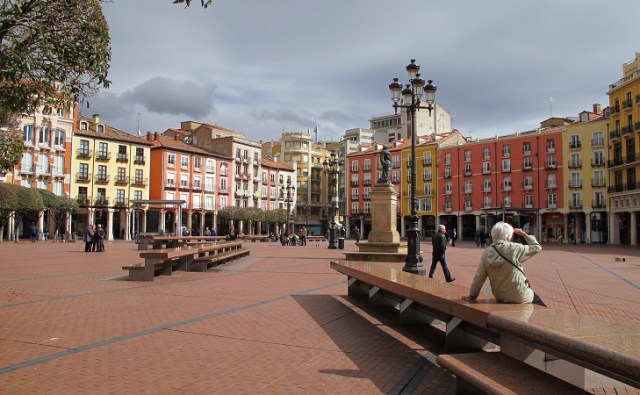
Burgos – Plaza de Mayor
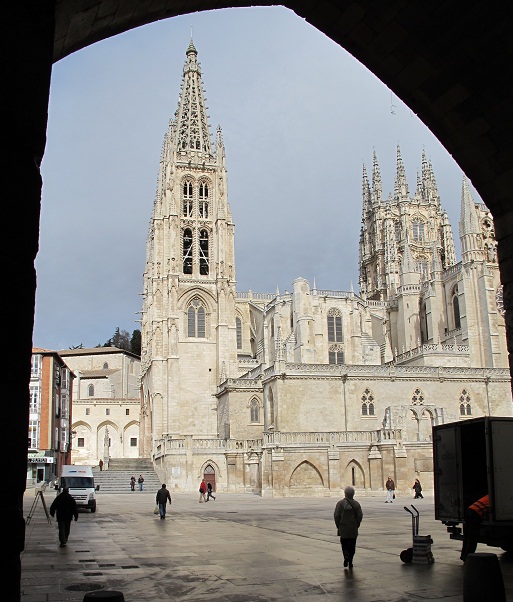
Burgos Cathedral
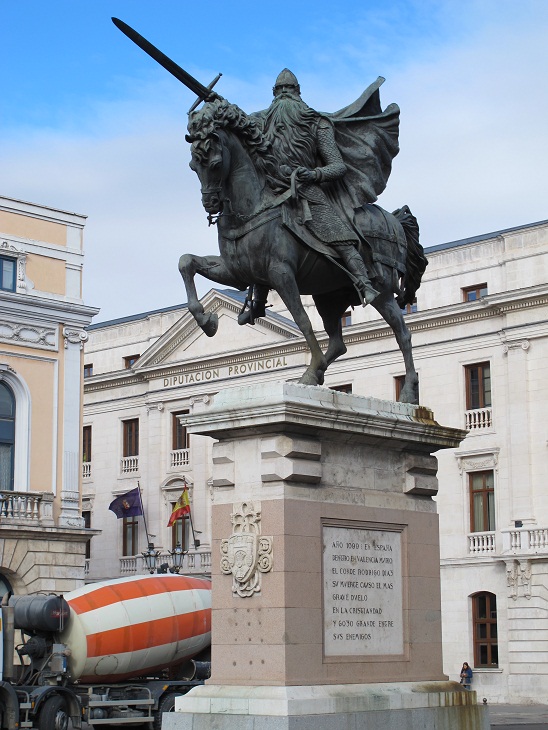
Burgos – Monument to El Cid (doesn’t look like Charleton Heston though)
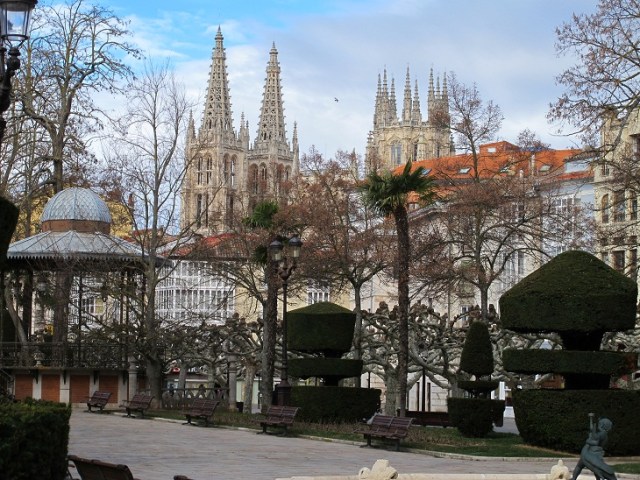
Burgos – Paseo de Espolon
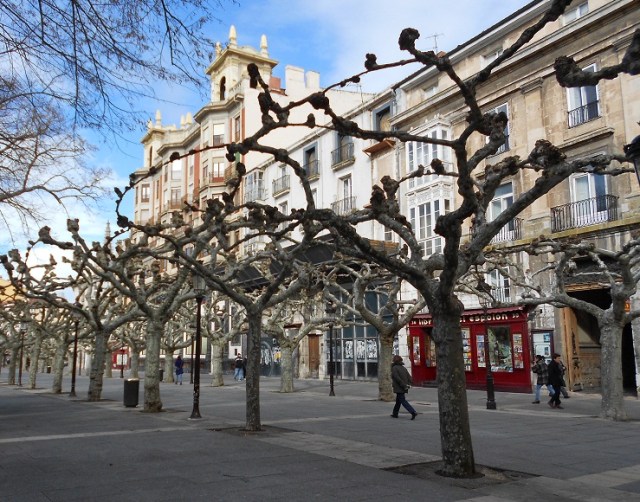
Burgos – Plane trees trained to join up
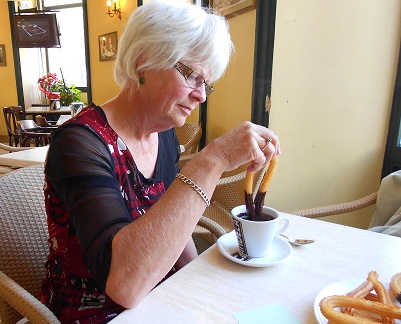
Burgos – churros & chocolate
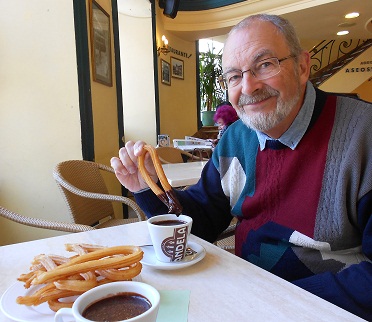
Burgos – churros & chocolate
Nice campsite in Burgos (ACSI rate of €16.00 per night), heated toilet blocks, and a bus service from the gate into the city. We walked back to the site along the riverside in the afternoon – an easy 40 minutes on the flat.
Santander: The road north from Burgos to Santander took us over the eastern end of the mountain range of Picos de Europa with all the peaks covered in snow, but we had a nice sunny day to do this. The roads throughout the Spanish countryside are very impressive – endless motorways (autovias) or dual carriageways, which are as good as most motorways elsewhere, and light traffic (except around Madrid). There have been a lot of toll roads built in recent years and they are pretty much empty, which is not surprising when they run alongside perfectly good motorways which are free! What a waste of EU funding.
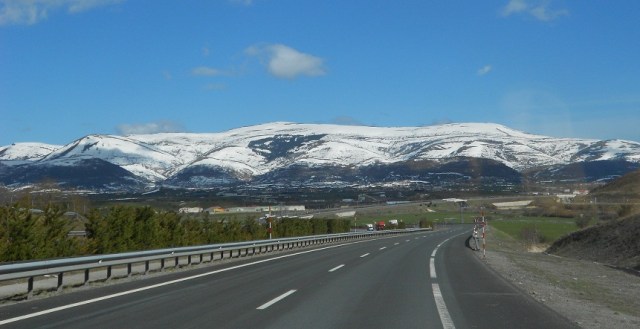
Motorway E05 through the Picos de Europa
Anyway, we arrived in Santander at midday, checked in to the ferry terminal, then we were free to wander until 6.00pm. We thought the city was very pleasant, especially as it was sunny and the temperature around 20oC as we basked in the sunshine at a café beside the cathedral. The only drawback being all the shops closing up at 1.30pm for siesta, and not opening again until 5.30pm.
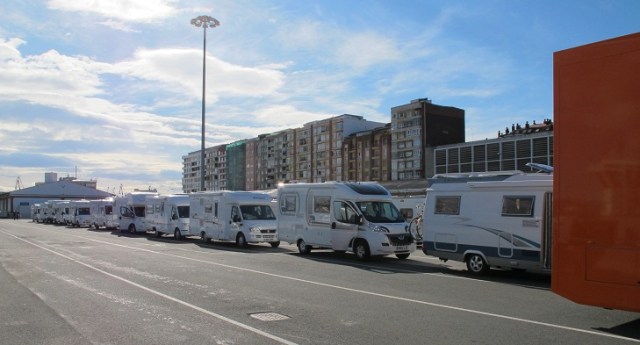
Santander – queued up on the ferry wharf after check-in.
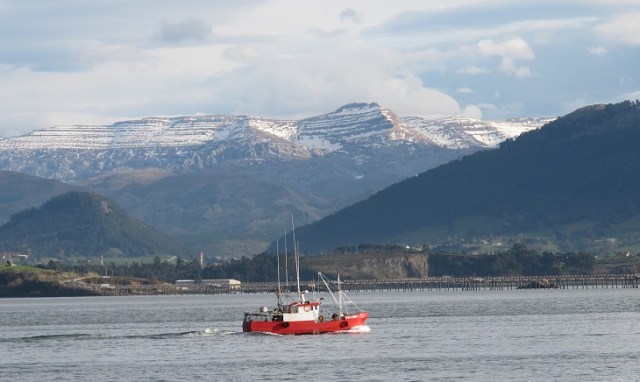
Santander – view of the mountains to the south
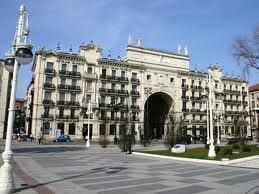
Banco Santander Headquarters
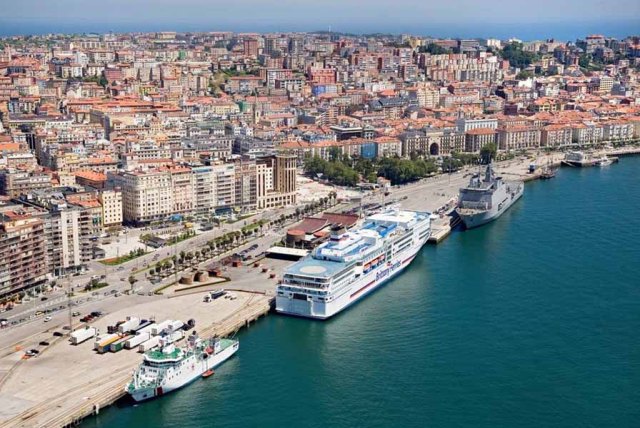
Santander – Brittany Ferry Pont-Aven
Talking to other caravan and motorhome owners on the wharf we heard lots of stories of foul weather, including snow and torrential rain, being experienced by others who had driven up from places like Valencia and Benidorm, and even from Costa del Sol only a day or two behind us. We were extremely lucky with our good weather the whole way. The ferry started loading at 6.00pm and we were on board by 7.00pm. We dumped our stuff in our cabin, then went to have dinner and treated ourselves to a meal in their top restaurant as a farewell to Spain. The buffet entrées were magnificent – heaps of smoked salmon, prawns, scampi, patés, meats and salads, then mains of fillet steak (Mike) and rack of lamb (Jan), and buffet desserts and cheese board. All washed down with a very nice Côtes du Rhône Village.
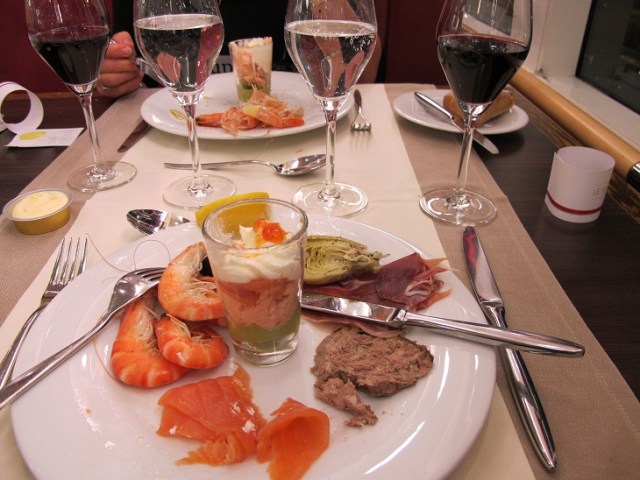
Brittany Ferry – dinner entrees (starters)
Brittany, then England again: We had a very smooth crossing of the Bay of Biscay and the cabin was quite comfortable. We woke in the morning to see the misty coast of Brittany passing by on the starboard side, with the lighthouse and the ruined Abbey of St Mathews Point on the headland of one of the most western points in France.
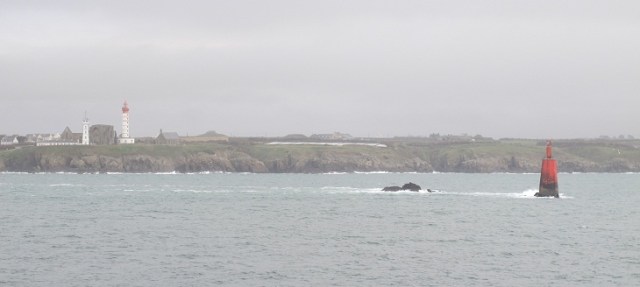
Brittany – St Mathew Point lighthouse
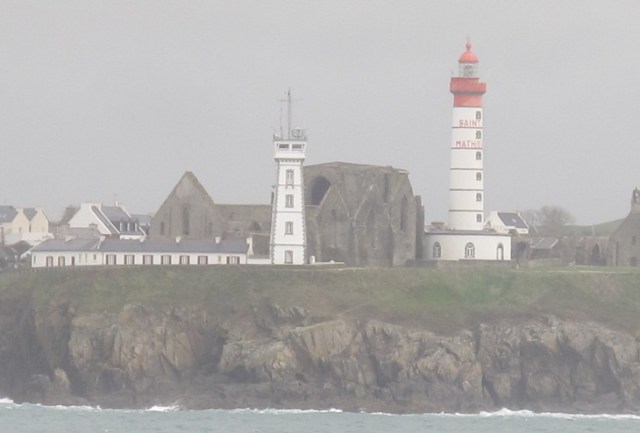
Brittany – St Mathew Point lighthouse and abbey
We then spent the day reading, eating and strolling the ship (plus a siesta) before arriving in Portsmouth at 7.30pm. We were one of the first vehicles off the ferry, and guess what !? – the weather was exactly the same in England as when we left in November – cold, dark, misty rain and fog. We drove to the only campsite open within 100 km of Portsmouth in the New Forest, and left again the next morning for our booked campsite at Denham near Uxbridge.
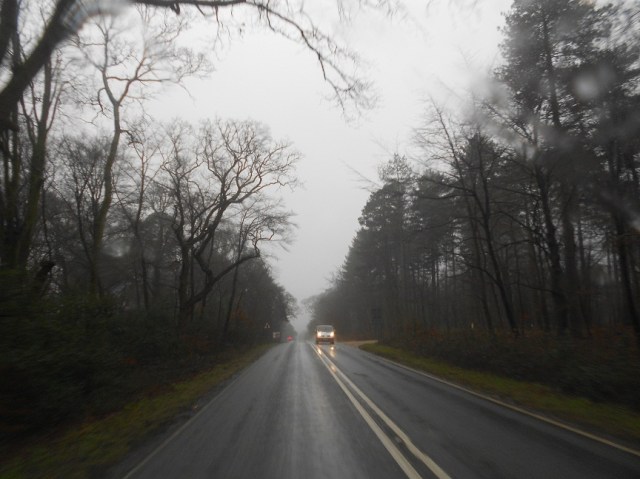
English spring day – New Forest
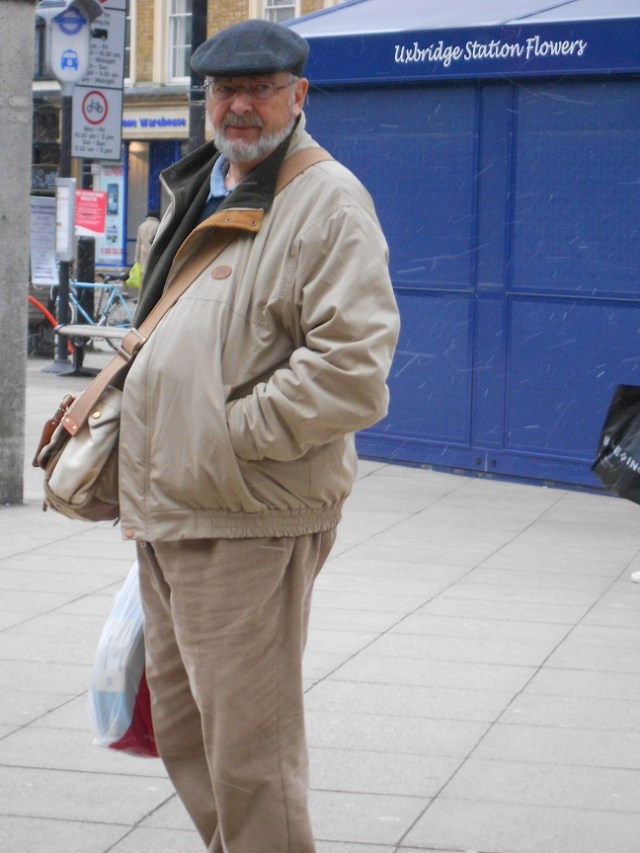
Shopping in Uxbridge – white streaks are snow flurries
We’ve been here for one week, and so far have had rain, snow and bitterly cold winds, plus some sunshine and heavy frosts, so we are very much looking forward to keeping warm and dry for a month of house and cat-sitting near Guildford. We start this tomorrow.
Ciao for now!
 Travels with d'Hobby
Mike and Jan
Lovely to hear from you. Sorry the weather hadn’t changed. Give a thought to those who live here.
Sounds as if you have had a good time.
Look forward to hearing more
Enjoy Guildford [and the weather!]
Joan and Peter
Beautiful photos really enjoyed your pictures , your both looking really fit and well , well see you soon luvs to you both Trishy